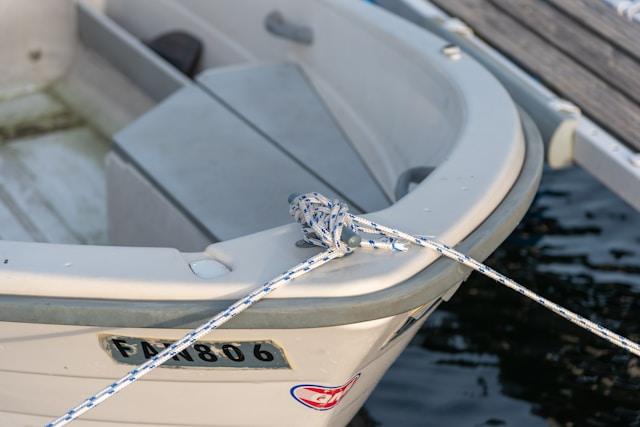
A boat's bow thruster is a transverse electric propeller unit installed at the bow through a thruster tunnel. It moves the bow sideways, making leaving and arriving at the dock manageable in any situation. A bow thruster suits boats roughly 6–17 meters long, and correctly sized, it significantly improves handling especially in tight marinas, gusty crosswinds, and strong currents.
Is a bow thruster worth getting for your boat?
A bow thruster isn't essential for every boater, but its benefits grow with boat size and the demands of the conditions used. Light boats under 7 meters are fast enough to maneuver with the outboard alone even in tight spots. On longer keelboats or heavy motorboats, though, where the rudder doesn't work at low speeds, a bow thruster completely changes the nature of maneuvering.
Typical situations where a bow thruster helps most:
Approaching narrow dock rows bow-first in a crosswind
Backing into a tight marina basin without help from the wind
Leaving a tight berth alone
On long sailboat bows, where the rudder loses effectiveness when stopped
A bow thruster also increases a boat's resale value, since it's standard equipment on many mid-size and larger boats. The downside is the small extra drag the tunnel creates while underway, but in practice this effect is remarkably small in modern designs.
Image name: bow-thruster-selection-and-installation
ALT text: A bow thruster installed on a boat to ease marina maneuvers
How is a bow thruster sized to boat size?
A bow thruster's most important selection criterion is thrust in kilograms-force (kgf), not motor power in watts. A common rule of thumb is that the thruster's thrust should be at least 1–1.5% of the boat's full weight. For example, a 4,000 kg boat needs at least 40–60 kgf of thrust.
On boats over 10 meters, it's usually worth switching to a 24-volt system, since at 12 volts cable cross-sections grow quite large as currents increase. When in doubt about sizing, it's worth choosing the bigger model: according to Marinekauppa customer experience, an undersized bow thruster is one of the most common sources of disappointment.
A common mistake when choosing a bow thruster is buying too small a unit. The boat's loaded weight can significantly exceed the spec sheet, and a crosswind can demand considerably more thrust than on a calm day. Bigger is better in this case.
What bow thruster options are available?
Marinekauppa's range includes bow thrusters from four leading manufacturers. Each has its own strengths:
Sleipner / Side-Power – A premium Norwegian brand; Q-PROP™ propeller technology cuts noise by up to 75%. The SE series covers boats from under 7 meters to over 17 meters (SE25–SE100). IPC overheat protection standard.
Lewmar TT series – An English classic, easy to install thanks to a round tunnel fitting, with an integrated "black box" protecting against user error. Suits 6–10 meter boats.
Quick – An Italian manufacturer with good value for money, a 5-blade propeller, and complete kits including tunnels. Popular on 7–10 meter boats.
MaxPower – Over 20 years of experience, a composite gearbox with no zinc anodes, single and dual propeller models. Suits 5.5–15 meter boats.
Check out Marinekauppa's range of bow thrusters and accessories.
Bow thruster installation – the main steps
Installing a bow thruster requires careful planning, but a motivated boater can do it themselves. There are five main steps: choosing the tunnel location, drilling and laminating the tunnel, installing the motor, wiring, and connecting the control panel. Before starting, it's recommended to go through the manufacturer's installation instructions, since dimensions and details vary by model.
1. Choosing and sizing the tunnel location
The thruster tunnel is placed as close to the bow as possible, where it produces the greatest turning moment. There's an important requirement for the tunnel's installation depth: the tunnel's top edge must stay at least half the tunnel's diameter below the waterline (0.5 × diameter). For example, on a Ø150mm tunnel, the top edge must be at least 75mm underwater. This prevents air ingestion, which collapses thrust and increases noise.
In practice, the boat's structure often limits the tunnel's installation height. However, the tunnel should always be installed as low as possible – experience shows that a thruster mounted too close to the surface "blows" water at the surface and loses noticeable thrust.
2. Drilling and laminating the tunnel in a fiberglass boat
The hole is first marked and drilled with a small bit through the centerline, after which a complete circle is scribed using a "compass" method. At this stage, it's worth checking the measurements three times before starting to cut – fixing a mistake later is laborious.
The seam between the tunnel and the hull is laminated tightly with epoxy- or polyester-resin-based fiberglass materials on both the inside and outside. A small "bulb" or flow deflector is often added on the outside, which guides water past the tunnel wall while sailing and reduces extra drag.
3. Installing the motor and gearbox
The right-angle gearbox is pushed into the tunnel and secured with bolts. Seals are a critical point: a suitable underwater-rated sealant is recommended between every seal. On Sleipner and Lewmar models, a flexible coupling between the motor and gearbox protects the drivetrain from objects hitting the propeller.
4. Battery bank and wiring
Wiring is often the installation's most critical part. A bow thruster draws very high momentary currents at startup – typically 200–400 amps depending on power class. That's why cable cross-section must be generously sized:
A bow thruster needs its own dedicated battery, or at least its own fused feed from the boat's main battery distribution panel. Most installation guides recommend an 80–120Ah starting-type battery placed close to the bow due to the short cable run – that way losses stay small. A 250–400A fuse should always be placed between the battery and the thruster as short-circuit protection for the cable, along with a separate main switch for maintenance and safety.
Read more about correct wiring in our boat electrical system guide and boat battery wiring instructions.
5. Connecting the control panel and joystick
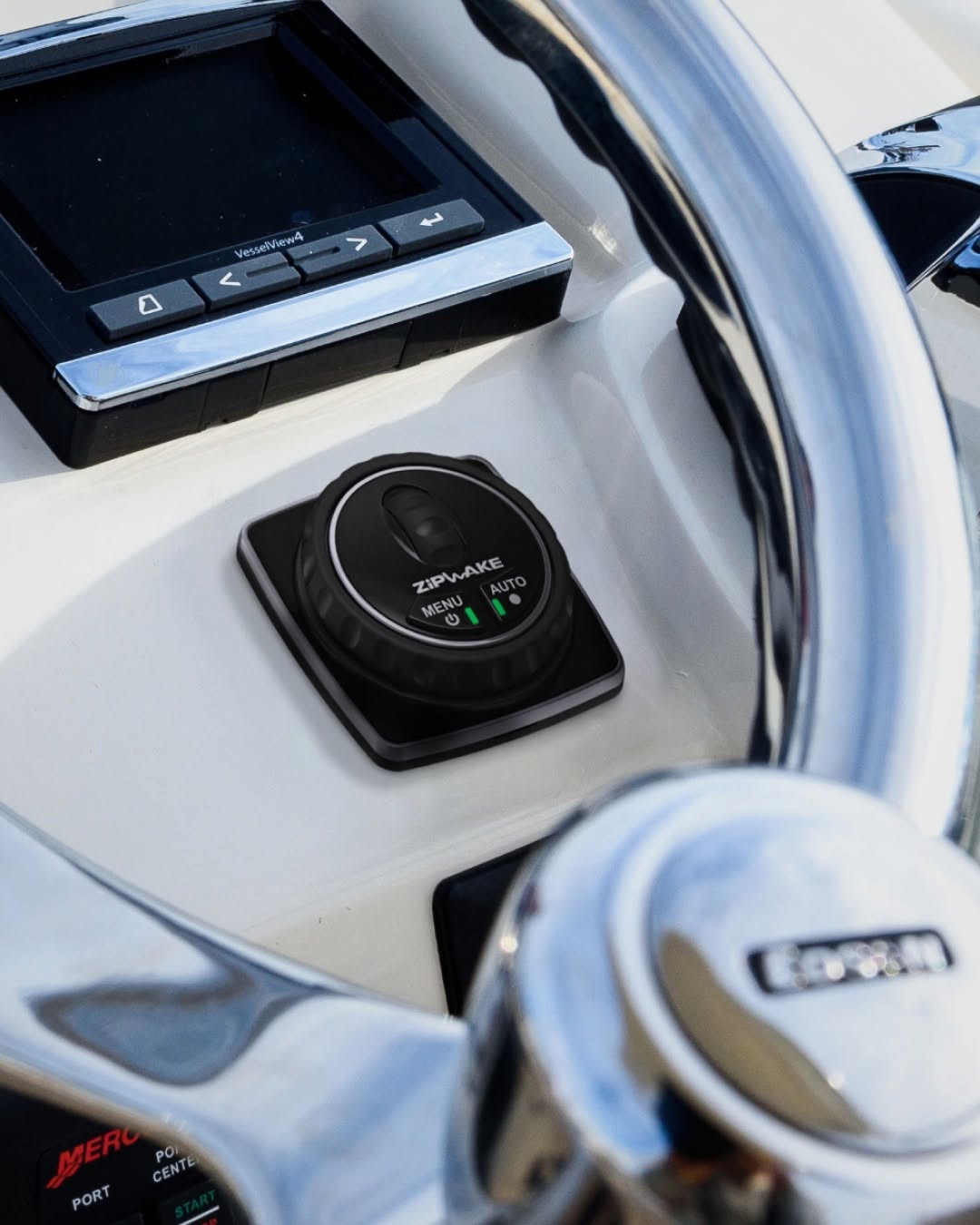
The control panel or joystick is run by cable to near the helm or steering console. On most modern models (Sleipner, Lewmar, Quick), the cable connects via a plug-and-go connector that only fits one way – so it can't be connected the wrong way round. Joystick control is generally the recommended option over a button panel: the hand motion intuitively tells you which way the bow is moving.
Installing a bow thruster typically takes 8–15 hours of work for one person, including lamination curing time.
Common problems and their solutions
The most common bow thruster installation problems and tips to avoid them:
Weak thrust or air noise: The tunnel is too close to the surface. Check that the tunnel's top edge is at least 0.5 × diameter underwater.
Thruster doesn't start at full power: The cable is undersized or the fuse too small. Measure voltage drop between the battery and thruster – it should be under 0.5V under load.
Bow thruster overheats after brief use: The thruster is undersized for the boat's weight. Manufacturers recommend no more than 30–60 seconds of continuous use.
Leak from the tunnel: Sealing has failed. The tunnel and hull must be cleaned, relaminated, and the sealant renewed throughout.
Vibration or uneven running: The propeller is damaged or fouled. Check the propeller and sensors at the start of the season.
Bow thruster maintenance at the start of the season and in winter storage
A bow thruster needs little, but regular, maintenance. At the start of the season, check the propeller's condition and any damage (rocks, mussels), sensor condition, and seal condition. Sleipner, Vetus, and Lewmar models have replaceable zinc anodes that protect metal parts from galvanic corrosion – renew these as needed.
For winter storage, the bow thruster itself doesn't need to be removed from the boat, but it's worth checking cables and connectors for oxidation. Our boat winter storage guide has more comprehensive instructions for the whole boat's maintenance tasks.
Frequently asked questions about bow thrusters
What's the best bow thruster brand?
Sleipner/Side-Power, Lewmar, Quick, and MaxPower are all quality, reliable choices. The choice depends on boat size, budget, and ease of installation. Sleipner stands out with quiet Q-PROP technology, Lewmar with ease of use, and Quick with competitive pricing.
Can I install a bow thruster myself?
Yes, an experienced DIY boater can install a bow thruster themselves. The critical points are laminating the tunnel tightly, correctly sizing the cable cross-section, and choosing the fuses. In uncertain situations, professional installation is a safe option.
Does a bow thruster need its own battery?
Not necessarily, but a separate battery close to the bow is clearly the best solution. It shortens the cable run, reduces voltage drop, and protects the rest of the electrical system from voltage collapse during the startup current spike.
Is a hydraulic or electric bow thruster better?
Electric is preferable for most leisure boat uses. It always works at the needed power regardless of engine RPM, is easier to install, and has simpler maintenance. Hydraulic suits larger commercial vessels better, where a hydraulic system is already in place and continuous use is needed.
Get a bow thruster from Marinekauppa
A correctly chosen and installed bow thruster makes leaving and arriving at the dock significantly more controlled, especially for a solo sailor or in crosswind conditions. Marinekauppa's range includes bow thrusters and installation supplies from Sleipner/Side-Power, Lewmar, Quick, and MaxPower – you'll find the right option from a small 7-meter archipelago boat to a larger sailing cruiser.
Also check out our product range here: bow thrusters. Need help choosing the right model? Marinekauppa's experts are happy to help!
Sources and further reading
Kipparilehti: Installing a bow thruster on a sailboat (2021)
Vetus – bow thruster manufacturer technical data
Sleipner/Side-Power – technical documentation
Lewmar – TT series installation instructions
North Marine – principles of professional installation
Boat length | Estimated weight | Recommended thrust | Tunnel diameter | Voltage | ||
5.5–7 m | under 1,500 kg | 25–35 kgf | Ø110–125 mm | 12 V | ||
7–10 m | 1,500–4,000 kg | 40–55 kgf | Ø125–150 mm | 12 V | ||
10–13 m | 4,000–8,000 kg | 55–80 kgf | Ø150–185 mm | 12 or 24 V | ||
13–17 m | 8,000–15,000 kg | 80–120+ kgf | Ø185–250 mm | 24 V | ||
Bow thruster power | Distance from battery | Minimum cable cross-section | ||||
1.5–2.2 kW (12 V) | under 4 m | 50 mm² | ||||
1.5–2.2 kW (12 V) | 4–7 m | 70 mm² | ||||
3–4 kW (12 V) | under 5 m | 95 mm² | ||||
3–4 kW (12 V) | 5–8 m | 120 mm² | ||||
all (24 V) | under 8 m | 50–70 mm² | ||||
Disclaimer
This guide provides general guidance only and does not replace the product manufacturer's operating, installation, or service instructions. Marinekauppa is not responsible for actions taken based on this guide or their consequences. Always check product-specific instructions and consult a qualified professional if needed.