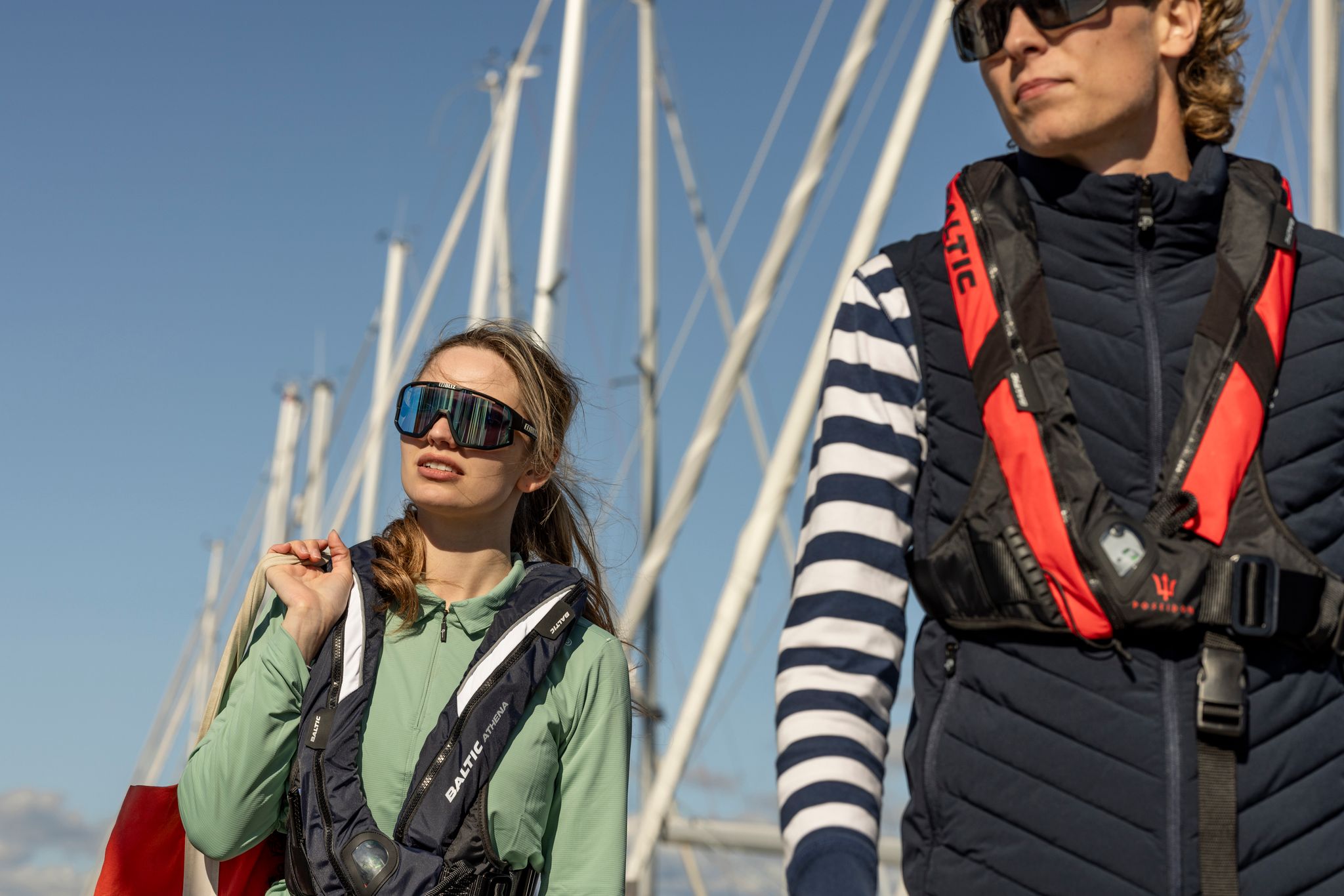
Life Jacket, Buoyancy Aid or Inflatable Life Jacket – A Comprehensive Comparison and Buying Guide
Life jackets, buoyancy aids, and inflatable life jackets are all flotation devices, but their operating principles, safety levels, and intended uses differ significantly. A life jacket (100N or more) will turn even an unconscious person onto their back and keep the airways above water. A buoyancy aid (50N) is a lighter flotation device for swimmers, while an inflatable life jacket only inflates in water, offering the highest level of protection with a comfortable and unobtrusive design.
According to Traficom statistics, 35 people died in recreational boating accidents in Finland in 2024, and almost all victims were not wearing life jackets. Choosing the right flotation device can literally save your life. In this guide, we go through the differences between life jacket types, Newton classifications, use cases, and selection criteria to help you find the right equipment for you.
Image name: different-lifejackets-comparison-life-jacket-buoyancy-aid-inflatable-life-jacket
ALT text: Life jackets, buoyancy aids and inflatable life jackets side by side for boating comparison
What does Newton rating mean in life jackets?
The performance of flotation devices is expressed in Newtons (N), which indicates buoyancy. According to the EN ISO 12402 standard, flotation devices are divided into four classes:
| Class | Buoyancy | Intended use | Turns unconscious person? |
|---|---|---|---|
| 50N | Buoyancy aids | Sheltered waters, swimmers | No |
| 100N | Life jackets | Inland waters, coastal | Yes, within 5–10 seconds |
| 150N | Inflatable life jackets | Offshore, sailing gear | Yes, quickly |
| 275N | Offshore life jackets | Oceans, professional use | Yes, very quickly |
"Life jackets are the most important safety equipment for boaters. In motorboats and sailboats over five meters, there must be a correctly sized life jacket or flotation device for every person on board." – Traficom
The higher the Newton rating, the greater the buoyancy and the faster the jacket turns a person into a safe position. However, the usage environment must be considered—on inland waters, a 275N life jacket with safety harness may be excessive.
Life Jacket – A traditional safety device for everyone
Traditional life jackets contain fixed buoyancy material (closed-cell foam) and provide at least 100 Newtons of buoyancy. They are typically bright orange, red, or yellow for visibility.
Key features
Life jackets always include a collar that supports the head and turns an unconscious person onto their back within 5–10 seconds. They also include crotch straps, reflectors, and a whistle. The fixed buoyancy material requires no maintenance or inflation mechanism, making them a reliable choice.
Children’s life jackets are especially important, as they are designed to turn the child face-up and support the head even if the child cannot do so themselves. For example, Baltic children’s life jackets include a lifting handle on the collar.
Who is it for?
Life jackets are ideal for non-swimmers and children, as spare jackets for guests, for fishing, calm day boating, and situations where a reliable, maintenance-free option is needed. Typical price range: €50–100.
Buoyancy Aid – A lightweight option for active use
Buoyancy aids (50N) are lighter and more compact than traditional life jackets, allowing greater freedom of movement.
Difference from life jackets
They do not turn an unconscious person onto their back. Their buoyancy is evenly distributed and they lack a collar. Therefore, they are only suitable for swimmers weighing at least 25 kg.
"50N buoyancy aids are suitable for activities such as light motor boating, rowing, kayaking, and other water sports where swimming is common and help is quickly available." – Baltic
Use cases
Popular in kayaking, SUP boarding, and dinghy sailing where mobility is critical. Also used as spare jackets and for calm near-shore boating. Price range: €20–100.
Inflatable Life Jacket – Automatic protection for demanding conditions
Inflatable life jackets represent modern flotation technology. They inflate automatically on contact with water or manually by pulling a cord, with a CO₂ cartridge inflating the bladder in about three seconds.
How they work
Automatic models use a trigger that activates in water. The trigger contains cellulose, which softens in water (commonly referred to as a “salt tablet”). When softened enough, it releases the CO₂ cartridge and inflates the jacket. Buoyancy ranges from 100N to 275N.
Types
- Automatic: Inflate on water contact, also include manual activation. Ideal for boating and sailing.
- Manual: Require pulling a cord. Suitable for kayaking, fly fishing, and situations with frequent splashing.
- Hydrostatic: Activate only under water pressure (not rain or splashes). Ideal for harsh marine conditions.
Inflatable life jackets with harnesses are popular among sailors, allowing attachment to a safety line.
Advantages and considerations
The main advantage is comfort—they are lightweight and unobtrusive, increasing the likelihood they are worn. A popular example is the Baltic Legend 165N, designed for all-day comfort.
A key safety feature: regardless of outer color, the bladder is always high-visibility yellow.
However, they require regular maintenance:
- Trigger replacement every 3–4 years or after activation
- CO₂ cartridge checked by weighing
- Warranty typically 5 years
Price range: €79–350.
Comparison – Which one suits you?
| Feature | Life Jacket (100N) | Buoyancy Aid (50N) | Inflatable (150N+) |
|---|---|---|---|
| Turns unconscious | Yes | No | Yes |
| Maintenance | Low | Low | Regular |
| Comfort/mobility | Moderate | Excellent | Excellent |
| Suitable for non-swimmers | Yes | No | Yes |
| Price | €50–100 | €20–100 | €79–350 |
Choosing the right size
Size is based on weight and chest circumference. A jacket that is too large can be dangerous.
Key rules
- Should not rise above the chin when arms are raised
- All straps must be tight
- No gaps between jacket and shoulders
- Always use crotch straps
Children’s jackets should never be bought with “room to grow.”
Legislation in Finland
According to Finnish law (2020), every person on board a motorboat or sailboat over 5 meters must have a CE-marked life jacket or flotation device. The skipper is responsible for instructing passengers.
Maintenance and storage
Inflatable jackets require regular inspection and servicing.
All jackets should be stored dry and out of sunlight.
Foam jackets should be checked annually for wear.
FAQ
Which is better, a life jacket or buoyancy aid?
Depends on use. Life jackets are safer for non-swimmers and children. Buoyancy aids suit active swimmers.
Are life jackets mandatory in Finland?
Not mandatory to wear, but required to have on board.
How often should inflatable jackets be serviced?
Check regularly; replace trigger every 3–4 years or after use.
Can children use buoyancy aids?
Not recommended unless they are strong swimmers.
Choose the right flotation device from Marinekauppa
The right flotation device is an investment in safety.
- Life jackets: general use, non-swimmers
- Buoyancy aids: active water sports
- Inflatable jackets: maximum protection and comfort
From Marinekauppa, you’ll find high-quality products from brands like Baltic, Crewsaver, and Spinlock.
Explore the selection and make a safe choice!
Sources
Traficom
Tukes
Finnish Institute of Occupational Health
EN ISO 12402 Standard


