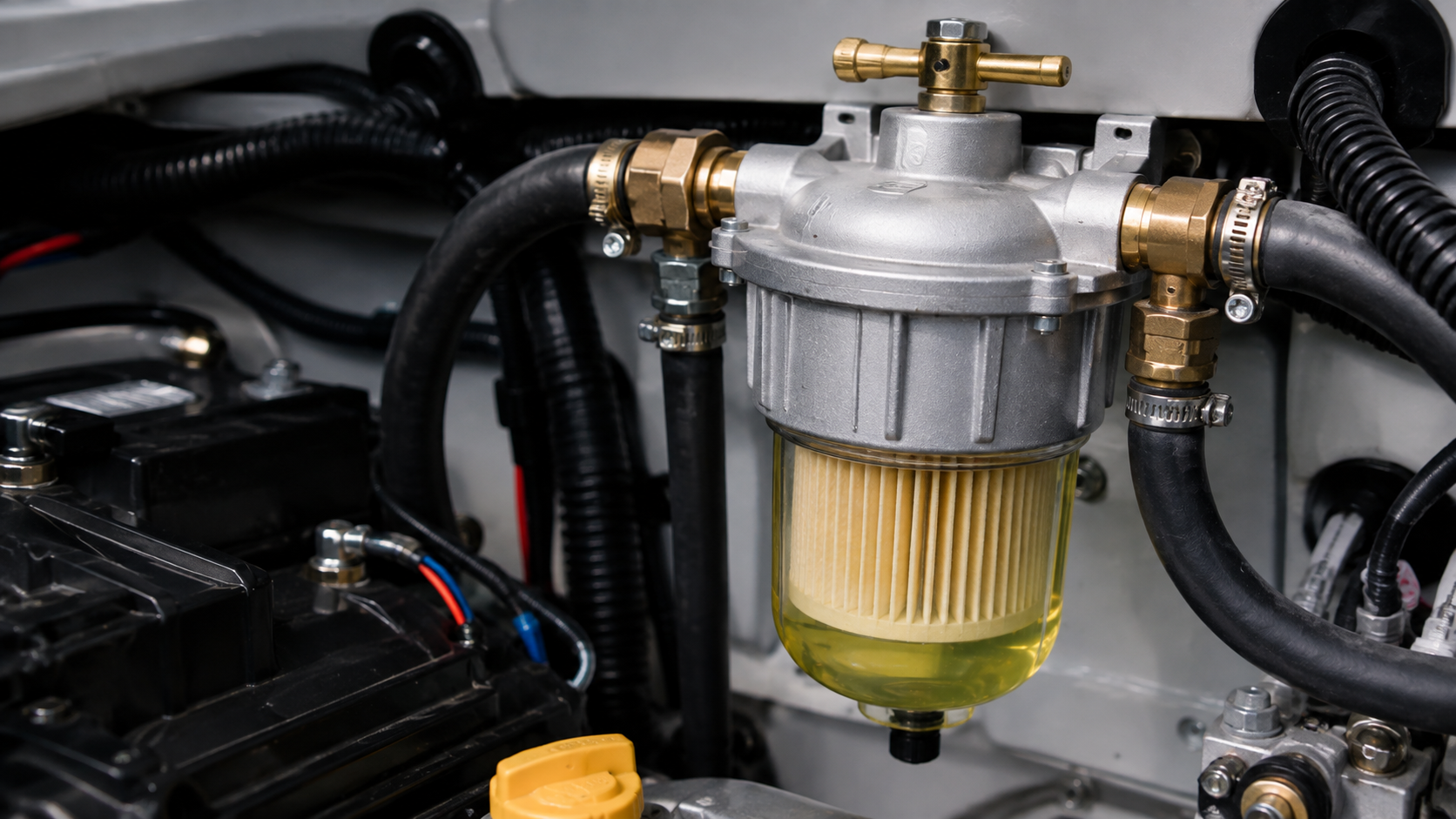
A boat's fuel system is the engine's lifeline,
and regular maintenance guarantees reliable operation in all conditions. Fuel
system maintenance covers replacing filters, inspecting hoses, draining the
water separator, and cleaning the system. A well-maintained fuel system extends
engine life, reduces fuel consumption, and prevents costly repairs.
Cleaning an outboard's fuel system is
especially important in Finnish conditions, where seasonal use and temperature
swings expose the system to moisture and contaminants. In this comprehensive
guide we cover every stage of boat fuel system maintenance, the most common
problems, and how to prevent them.
What is a boat's fuel system and how does it work?
A boat's fuel system is the engine's lifeline,
and regular maintenance guarantees reliable operation in all conditions. Fuel
system maintenance covers replacing filters, inspecting hoses, draining the
water separator, and cleaning the system. A well-maintained fuel system extends
engine life, reduces fuel consumption, and prevents costly repairs.
Cleaning an outboard's fuel system is
especially important in Finnish conditions, where seasonal use and temperature
swings expose the system to moisture and contaminants. In this comprehensive
guide we cover every stage of boat fuel system maintenance, the most common
problems, and how to prevent them.
What is a boat's fuel system and how does it work?
A boat's fuel
system consists of several interconnected components that together ensure fuel
is delivered from the tank to the engine. The main parts are the fuel tank,
fuel hoses, fuel pump, fuel filter and water separator, and the injectors or
carburetor.
The fuel pump
draws fuel from the tank and delivers it through the filters to the engine.
Modern EFI (Electronic Fuel Injection) engines use an electric fuel pump and
precise injectors, while older engines may have a mechanical pump and a
carburetor. In both cases, clean fuel is essential for smooth engine running.
A boat's fuel
system consists of several interconnected components that together ensure fuel
is delivered from the tank to the engine. The main parts are the fuel tank,
fuel hoses, fuel pump, fuel filter and water separator, and the injectors or
carburetor.
The fuel pump
draws fuel from the tank and delivers it through the filters to the engine.
Modern EFI (Electronic Fuel Injection) engines use an electric fuel pump and
precise injectors, while older engines may have a mechanical pump and a
carburetor. In both cases, clean fuel is essential for smooth engine running.
Differences between petrol and
diesel systems
A petrol engine's
fuel system typically operates at lower pressure than a diesel system. In
petrol engines, fuel pressure ranges from 2–4 bar in carbureted engines to 3–6
bar in EFI engines. In diesel engines' common-rail systems, pressure can rise
as high as 2,000 bar, which places significantly higher demands on fuel
cleanliness and filtration.
Diesel fuel is
more prone to water accumulation and bacterial growth, which is why diesel
systems always use an effective water separator. In petrol systems, a water separator is a
recommended extra but not a necessity. Filtration precision in diesel systems
is typically 2–10 microns, while 10–40 micron filtration is sufficient in
petrol systems.
A petrol engine's
fuel system typically operates at lower pressure than a diesel system. In
petrol engines, fuel pressure ranges from 2–4 bar in carbureted engines to 3–6
bar in EFI engines. In diesel engines' common-rail systems, pressure can rise
as high as 2,000 bar, which places significantly higher demands on fuel
cleanliness and filtration.
Diesel fuel is
more prone to water accumulation and bacterial growth, which is why diesel
systems always use an effective water separator. In petrol systems, a water separator is a
recommended extra but not a necessity. Filtration precision in diesel systems
is typically 2–10 microns, while 10–40 micron filtration is sufficient in
petrol systems.
Fuel system pressure levels
Fuel system
pressure directly affects the choice of filters and hoses. Low-pressure
systems, such as the fuel lines in traditional carbureted engines, generally
use more affordable standard hoses and filters. High-pressure systems require
reinforced hoses and steel lines that can withstand the pressure without
swelling or leaking.
Most running
problems in boat engines are caused by fuel system issues. Regular filter
replacement and monitoring fuel quality prevent the majority of these faults.
Clogged filters
and contaminated fuel are among the most common reasons for engine service
visits – most of these cases could be prevented with regular filter replacement
and monitoring fuel quality.
Fuel system
pressure directly affects the choice of filters and hoses. Low-pressure
systems, such as the fuel lines in traditional carbureted engines, generally
use more affordable standard hoses and filters. High-pressure systems require
reinforced hoses and steel lines that can withstand the pressure without
swelling or leaking.
Most running
problems in boat engines are caused by fuel system issues. Regular filter
replacement and monitoring fuel quality prevent the majority of these faults.
Clogged filters
and contaminated fuel are among the most common reasons for engine service
visits – most of these cases could be prevented with regular filter replacement
and monitoring fuel quality.
When should a boat's fuel filter
be replaced?
A boat's fuel
filter should be replaced at least once a year or every 100 hours of use,
whichever comes first. On boats in active use, the replacement interval may be
shorter, especially if fuel is sourced from varying suppliers or moisture
problems have been found in the tank.
A boat's fuel
filter should be replaced at least once a year or every 100 hours of use,
whichever comes first. On boats in active use, the replacement interval may be
shorter, especially if fuel is sourced from varying suppliers or moisture
problems have been found in the tank.
Signs the filter needs replacing
A clogged fuel
filter causes recognizable symptoms, the most common being difficulty starting,
reduced power especially at high revs, uneven idling, and the engine stalling
under load. If these symptoms appear, checking the filter is the first step.
A clogged fuel
filter restricts fuel flow, so the engine doesn't get enough fuel for efficient
operation. This can lead to engine overheating and serious damage if the
problem isn't fixed in time.
A clogged fuel
filter causes recognizable symptoms, the most common being difficulty starting,
reduced power especially at high revs, uneven idling, and the engine stalling
under load. If these symptoms appear, checking the filter is the first step.
A clogged fuel
filter restricts fuel flow, so the engine doesn't get enough fuel for efficient
operation. This can lead to engine overheating and serious damage if the
problem isn't fixed in time.
Replacing the fuel filter, step
by step
Replacing the
fuel filter is one of the easiest maintenance tasks to do yourself. You'll need
a new filter that matches your engine's requirements, plus basic tools such as
a wrench and clean rags.
Start by closing
the fuel valve, if one is fitted. Place a container under the filter to catch
any fuel spillage. Loosen the old filter's connections carefully and remove the
hose fittings. Mark the direction of fuel flow before removal, since the new filter
must be installed the same way round. Fit the new filter with its fittings and
tighten the connections evenly. Prime the system with the primer bulb before
starting the engine.
Replacing the
fuel filter is one of the easiest maintenance tasks to do yourself. You'll need
a new filter that matches your engine's requirements, plus basic tools such as
a wrench and clean rags.
Start by closing
the fuel valve, if one is fitted. Place a container under the filter to catch
any fuel spillage. Loosen the old filter's connections carefully and remove the
hose fittings. Mark the direction of fuel flow before removal, since the new filter
must be installed the same way round. Fit the new filter with its fittings and
tighten the connections evenly. Prime the system with the primer bulb before
starting the engine.
How is the water separator
serviced and drained?
The water
separator is a critical protective component in the fuel system, separating
water and heavy contaminants from the fuel before they reach the engine. Water
in the fuel can cause serious damage to the fuel pump, injectors, and the
engine's internals.
The boat's water
separator should be drained regularly – in practice after every refueling, by
checking the separator's bowl or sight glass for accumulated water. On diesel
engines the water separator is especially important, since diesel fuel
accumulates water more readily than petrol.
The water
separator is a critical protective component in the fuel system, separating
water and heavy contaminants from the fuel before they reach the engine. Water
in the fuel can cause serious damage to the fuel pump, injectors, and the
engine's internals.
The boat's water
separator should be drained regularly – in practice after every refueling, by
checking the separator's bowl or sight glass for accumulated water. On diesel
engines the water separator is especially important, since diesel fuel
accumulates water more readily than petrol.
Draining and cleaning the water
separator
Draining the
water separator is a simple task that takes just a few minutes. Place a
container under the separator and open the drain valve at the bottom. Let the
water and contaminants drain out until clean fuel starts to flow. Close the
valve and check for leaks. Water is clearly visible in the separator as a
separate layer, since it settles below the fuel.
The water
separator's filter element should be replaced the same way as the fuel filter,
usually once a season. Many quality water separators, such as those in the
Racor line, use replaceable filter elements, which are quick and inexpensive to
change compared with the engine damage a clogged filter can cause.
Draining the
water separator is a simple task that takes just a few minutes. Place a
container under the separator and open the drain valve at the bottom. Let the
water and contaminants drain out until clean fuel starts to flow. Close the
valve and check for leaks. Water is clearly visible in the separator as a
separate layer, since it settles below the fuel.
The water
separator's filter element should be replaced the same way as the fuel filter,
usually once a season. Many quality water separators, such as those in the
Racor line, use replaceable filter elements, which are quick and inexpensive to
change compared with the engine damage a clogged filter can cause.
Inspecting and replacing fuel hoses
Fuel hoses are under constant stress: UV
radiation, temperature swings, the fuel's chemicals, and mechanical abrasion
wear hoses down over time. A worn or damaged hose can lead to a fuel leak,
which is a serious safety risk.
Inspect fuel hoses visually at least twice a
season. Look for signs of cracking, bulging, hardening, or discoloration. Test
the hose's flexibility by bending it gently: a healthy hose bends flexibly
without cracking or stiffness.
Fuel hoses are under constant stress: UV
radiation, temperature swings, the fuel's chemicals, and mechanical abrasion
wear hoses down over time. A worn or damaged hose can lead to a fuel leak,
which is a serious safety risk.
Inspect fuel hoses visually at least twice a
season. Look for signs of cracking, bulging, hardening, or discoloration. Test
the hose's flexibility by bending it gently: a healthy hose bends flexibly
without cracking or stiffness.
When to replace fuel hoses
Fuel hoses should be replaced every five years
regardless of their outward condition. The inside of a hose can deteriorate
before any outward damage appears, which means particles can break loose from
the hose and clog filters and injectors. Always use marine-approved fuel hoses
that withstand petrol and diesel, salt water, and UV radiation.
When replacing hoses, it's important to choose
the correct diameter and material. Modern ethanol-blended fuels (E10) place
stricter demands on hose material than traditional fuels. Make sure the hose
you choose is compatible with your engine's fuel type.
Fuel hoses should be replaced every five years
regardless of their outward condition. The inside of a hose can deteriorate
before any outward damage appears, which means particles can break loose from
the hose and clog filters and injectors. Always use marine-approved fuel hoses
that withstand petrol and diesel, salt water, and UV radiation.
When replacing hoses, it's important to choose
the correct diameter and material. Modern ethanol-blended fuels (E10) place
stricter demands on hose material than traditional fuels. Make sure the hose
you choose is compatible with your engine's fuel type.
Cleaning an outboard's fuel system
Cleaning an outboard's fuel system is
recommended once a season, preferably before winter storage or at the start of
the season. Cleaning removes deposits from the carburetor or injectors, the
fuel pump, and the fuel lines.
Cleaning an outboard's fuel system is
recommended once a season, preferably before winter storage or at the start of
the season. Cleaning removes deposits from the carburetor or injectors, the
fuel pump, and the fuel lines.
Cleaning with additives
Special additives are available for fuel
system cleaning that dissolve deposits and contaminants as they travel through
with the fuel. These additives are suitable for regular use to keep the system
clean. The cleaning additive is added to the fuel tank according to the
manufacturer's instructions, after which the engine is run normally so the
additive travels through the whole system.
In diesel engines, bacterial and algae growth
in the fuel tank is a common problem, especially if the engine sits unused for
long periods. Diesel additives and antibacterial treatments prevent
microorganism growth and keep the fuel system clean. See our comprehensive
article on antifreeze, stabilizers, and diesel additives for more information
on using different additives.
Special additives are available for fuel
system cleaning that dissolve deposits and contaminants as they travel through
with the fuel. These additives are suitable for regular use to keep the system
clean. The cleaning additive is added to the fuel tank according to the
manufacturer's instructions, after which the engine is run normally so the
additive travels through the whole system.
In diesel engines, bacterial and algae growth
in the fuel tank is a common problem, especially if the engine sits unused for
long periods. Diesel additives and antibacterial treatments prevent
microorganism growth and keep the fuel system clean. See our comprehensive
article on antifreeze, stabilizers, and diesel additives for more information
on using different additives.
Mechanical cleaning
In more serious clogging situations, the fuel
system may need to be cleaned mechanically. This means removing and cleaning
the carburetor or injectors with a special carburetor cleaner. Ultrasonic
cleaning is an effective method for cleaning injectors, but it requires
specialized equipment.
Cleaning the carburetor is a more common task
on older outboards. Typical areas needing cleaning include the jets, needle
valves, and float. On modern EFI engines, cleaning the injectors is rarely
necessary, but a clogged injector can cause uneven running and reduced power.
In more serious clogging situations, the fuel
system may need to be cleaned mechanically. This means removing and cleaning
the carburetor or injectors with a special carburetor cleaner. Ultrasonic
cleaning is an effective method for cleaning injectors, but it requires
specialized equipment.
Cleaning the carburetor is a more common task
on older outboards. Typical areas needing cleaning include the jets, needle
valves, and float. On modern EFI engines, cleaning the injectors is rarely
necessary, but a clogged injector can cause uneven running and reduced power.
Fuel tank maintenance and cleaning
The fuel tank is the starting point of the
fuel system, and its condition directly affects the whole system's performance.
Over time, sediment, water, and contaminants build up in the tank, which can
clog filters and damage the engine.
Cleaning the tank is recommended every 3–5
years, or whenever moisture problems or contaminants are found in the tank. During cleaning, the tank is emptied
completely, the interior surfaces are washed, and it's checked for damage.
Metal tanks should be checked for corrosion, and plastic tanks for any cracks
or brittleness.
The fuel tank is the starting point of the
fuel system, and its condition directly affects the whole system's performance.
Over time, sediment, water, and contaminants build up in the tank, which can
clog filters and damage the engine.
Cleaning the tank is recommended every 3–5
years, or whenever moisture problems or contaminants are found in the tank. During cleaning, the tank is emptied
completely, the interior surfaces are washed, and it's checked for damage.
Metal tanks should be checked for corrosion, and plastic tanks for any cracks
or brittleness.
Fuel tank filling practices
Correct filling
practices reduce moisture problems and extend fuel shelf life. Keep the tank as
full as possible while sitting idle, since air space in an empty tank allows
moisture to condense on the tank walls. Refuel from reliable sources and, if
needed, use a portable water separator during fueling to filter out
contaminants.
Correct filling
practices reduce moisture problems and extend fuel shelf life. Keep the tank as
full as possible while sitting idle, since air space in an empty tank allows
moisture to condense on the tank walls. Refuel from reliable sources and, if
needed, use a portable water separator during fueling to filter out
contaminants.
Typical fuel system problems and
how to prevent them
Fuel system
problems usually show up as engine running issues that get worse over time.
Prevention is always cheaper than repairing damage after the fact.
Fuel system
problems usually show up as engine running issues that get worse over time.
Prevention is always cheaper than repairing damage after the fact.
Water in the fuel
Water is the most
common fuel contaminant, entering the system through condensation in the tank,
during refueling, or through damaged seals. Symptoms caused by water include
difficulty starting, uneven running, and stalling under load. Prevent water
problems by keeping the tank full, using a water separator, and checking the
tank's ventilation regularly.
Water is the most
common fuel contaminant, entering the system through condensation in the tank,
during refueling, or through damaged seals. Symptoms caused by water include
difficulty starting, uneven running, and stalling under load. Prevent water
problems by keeping the tank full, using a water separator, and checking the
tank's ventilation regularly.
Fuel aging
Fuel begins to
oxidize and break down within just a few weeks, especially in a warm
environment. Aged fuel forms
varnish and sediment that clog filters and injectors. Use a stabilizer whenever
the engine will sit unused for more than a month, and especially before winter
storage.
Fuel begins to
oxidize and break down within just a few weeks, especially in a warm
environment. Aged fuel forms
varnish and sediment that clog filters and injectors. Use a stabilizer whenever
the engine will sit unused for more than a month, and especially before winter
storage.
The effects of E10 petrol on the
fuel system
The petrol used
in Finland, E10, contains up to 10% bioethanol, which places special demands on
the fuel system. Ethanol is hygroscopic, meaning it absorbs moisture from the
air, which increases water accumulation in the fuel system. Ethanol can also
dissolve the rubber seals and hoses used in older boats, causing leaks and
blockages.
Using E10 petrol
requires more frequent draining of the water separator and checking the
condition of the hoses. For older engines, it's advisable to replace fuel hoses
with E10-compatible versions if the original hoses were made before 2010. Fuel stabilization is especially important for E10 petrol, since
ethanol-based fuel ages faster than traditional petrol.
The petrol used
in Finland, E10, contains up to 10% bioethanol, which places special demands on
the fuel system. Ethanol is hygroscopic, meaning it absorbs moisture from the
air, which increases water accumulation in the fuel system. Ethanol can also
dissolve the rubber seals and hoses used in older boats, causing leaks and
blockages.
Using E10 petrol
requires more frequent draining of the water separator and checking the
condition of the hoses. For older engines, it's advisable to replace fuel hoses
with E10-compatible versions if the original hoses were made before 2010. Fuel stabilization is especially important for E10 petrol, since
ethanol-based fuel ages faster than traditional petrol.
Airlock in the fuel system
An airlock occurs when air enters the fuel
system, for example during a filter change or when the tank runs dry. An
airlock blocks fuel flow and prevents the engine from starting. An airlock is
cleared by bleeding the system with the primer bulb or a dedicated bleed screw,
found on most diesel engines.
An airlock occurs when air enters the fuel
system, for example during a filter change or when the tank runs dry. An
airlock blocks fuel flow and prevents the engine from starting. An airlock is
cleared by bleeding the system with the primer bulb or a dedicated bleed screw,
found on most diesel engines.
Fuel system service schedule
A regular service schedule is the best way to
ensure the fuel system keeps working properly. The table below shows the
recommended service intervals for different components:
A regular service schedule is the best way to
ensure the fuel system keeps working properly. The table below shows the
recommended service intervals for different components:
Fuel system service for different engine makes
Different engine manufacturers' fuel systems
follow the same basic principles, but the filter model, location, and
replacement intervals vary. Always use your engine manufacturer's recommended
genuine parts or quality equivalents.
Different engine manufacturers' fuel systems
follow the same basic principles, but the filter model, location, and
replacement intervals vary. Always use your engine manufacturer's recommended
genuine parts or quality equivalents.
Yamaha and Suzuki outboards
Yamaha outboards are known for their fuel
system reliability but still require regular maintenance. Yamaha recommends
replacing the fuel filter every 100 hours of use or once a season. On Suzuki
outboards, fuel system maintenance is part of the annual service program, and
service kits often include the fuel filter as well.
Yamaha outboards are known for their fuel
system reliability but still require regular maintenance. Yamaha recommends
replacing the fuel filter every 100 hours of use or once a season. On Suzuki
outboards, fuel system maintenance is part of the annual service program, and
service kits often include the fuel filter as well.
Mercury and Volvo Penta
Mercury engines typically use filters fitted
with a water separator, which effectively protect the engine from
contamination. On Volvo Penta diesel engines, fuel system maintenance is
especially important, since fuel quality requirements are high due to modern
common-rail systems.
Mercury engines typically use filters fitted
with a water separator, which effectively protect the engine from
contamination. On Volvo Penta diesel engines, fuel system maintenance is
especially important, since fuel quality requirements are high due to modern
common-rail systems.
Fuel system maintenance during winter storage
Winter storage is a critical stage for fuel
system upkeep. Properly done winter service ensures trouble-free starting in
spring and prevents damage that can occur over winter.
Winter storage is a critical stage for fuel
system upkeep. Properly done winter service ensures trouble-free starting in
spring and prevents damage that can occur over winter.
Winter storage service tasks
Before winter storage, add stabilizer to the
fuel according to the manufacturer's instructions. Start the engine and let it
run for 10–15 minutes so the stabilizer travels through the entire fuel system.
Fill the fuel tank almost
full, leaving a little room for expansion. Close the fuel valve if one is fitted.
Check the filters
and replace them if needed before storage. A worn filter can become brittle
over winter and clog at the first start-up in spring. Also check the condition
of the hoses and connections, since the contraction and expansion caused by
frost puts stress on the materials.
Before winter storage, add stabilizer to the
fuel according to the manufacturer's instructions. Start the engine and let it
run for 10–15 minutes so the stabilizer travels through the entire fuel system.
Fill the fuel tank almost
full, leaving a little room for expansion. Close the fuel valve if one is fitted.
Check the filters
and replace them if needed before storage. A worn filter can become brittle
over winter and clog at the first start-up in spring. Also check the condition
of the hoses and connections, since the contraction and expansion caused by
frost puts stress on the materials.
Fuel system maintenance tools
and supplies
In addition to
basic tools, a few specialty items are needed for fuel system maintenance.
Basic equipment includes fuel-resistant protective gloves, a container to catch
fuel, clean rags, and suitable wrenches and screwdrivers.
For filter
changes you'll need a filter of the correct size and, if needed, a filter
wrench for removing tightly fitted spin-on filters. Draining the water
separator usually just requires a container, but it's also useful to have spare
seals and O-rings on hand.
For fuel system
cleaning it's worth getting a quality cleaning additive and possibly a separate
spray-type carburetor cleaner. Keeping a stock of service parts and supplies at
home saves time and allows you to react quickly if problems arise.
In addition to
basic tools, a few specialty items are needed for fuel system maintenance.
Basic equipment includes fuel-resistant protective gloves, a container to catch
fuel, clean rags, and suitable wrenches and screwdrivers.
For filter
changes you'll need a filter of the correct size and, if needed, a filter
wrench for removing tightly fitted spin-on filters. Draining the water
separator usually just requires a container, but it's also useful to have spare
seals and O-rings on hand.
For fuel system
cleaning it's worth getting a quality cleaning additive and possibly a separate
spray-type carburetor cleaner. Keeping a stock of service parts and supplies at
home saves time and allows you to react quickly if problems arise.
Safety when servicing the fuel
system
Fuels are highly
flammable liquids, and special care must be taken when handling them. Always
work in a well-ventilated space, preferably outdoors. Avoid open flames and
sparks near fuel. Wear protective gloves and eye protection, since fuel
irritates skin and eyes.
Collect any
spilled fuel carefully and dispose of it properly at a hazardous waste
collection point. Never let fuel enter a waterway or drain. Keep fire
extinguishing equipment close at hand during service work. Petrol vapors are
heavier than air and can collect in the bottom of the boat, so make sure
there's adequate ventilation, especially in enclosed spaces.
Fuels are highly
flammable liquids, and special care must be taken when handling them. Always
work in a well-ventilated space, preferably outdoors. Avoid open flames and
sparks near fuel. Wear protective gloves and eye protection, since fuel
irritates skin and eyes.
Collect any
spilled fuel carefully and dispose of it properly at a hazardous waste
collection point. Never let fuel enter a waterway or drain. Keep fire
extinguishing equipment close at hand during service work. Petrol vapors are
heavier than air and can collect in the bottom of the boat, so make sure
there's adequate ventilation, especially in enclosed spaces.
Frequently asked questions about
fuel system maintenance
How often does a boat's fuel
filter need to be replaced?
A boat's fuel
filter should be replaced at least once a year or every 100 hours of use. If
the engine is used actively or fuel quality varies, the filter should be
replaced more often. On diesel engines, the replacement interval may be shorter
due to diesel fuel's higher contaminant content.
A boat's fuel
filter should be replaced at least once a year or every 100 hours of use. If
the engine is used actively or fuel quality varies, the filter should be
replaced more often. On diesel engines, the replacement interval may be shorter
due to diesel fuel's higher contaminant content.
How do I recognize a clogged
fuel filter?
A clogged fuel
filter causes difficulty starting the engine, reduced power at high revs,
uneven idling, and stalling under load. When these symptoms appear, checking
the filter is the first step. Visually, a clogged filter looks dark and dirty
compared with a new one.
A clogged fuel
filter causes difficulty starting the engine, reduced power at high revs,
uneven idling, and stalling under load. When these symptoms appear, checking
the filter is the first step. Visually, a clogged filter looks dark and dirty
compared with a new one.
Can I service the fuel system
myself?
Yes, most boaters
can manage basic fuel system maintenance at home. Replacing filters, draining
the water separator, and inspecting hoses are simple tasks. More complex jobs,
such as cleaning injectors or replacing the fuel pump, are best left to a professional.
Yes, most boaters
can manage basic fuel system maintenance at home. Replacing filters, draining
the water separator, and inspecting hoses are simple tasks. More complex jobs,
such as cleaning injectors or replacing the fuel pump, are best left to a professional.
What additives are worth using
for fuel system maintenance?
Recommended
additives include stabilizers for long-term storage, cleaning additives to
remove deposits, and, for diesel engines, antibacterial additives. Read more
about using different additives in our article on antifreeze, stabilizers, and
diesel additives.
Recommended
additives include stabilizers for long-term storage, cleaning additives to
remove deposits, and, for diesel engines, antibacterial additives. Read more
about using different additives in our article on antifreeze, stabilizers, and
diesel additives.
How do I prevent water from entering the fuel system?
Keep the fuel tank as full as possible while
sitting idle, use a water separator, check that the tank's ventilation works,
and refuel from reliable sources. Regularly draining the water separator
removes any accumulated moisture before it reaches the engine.
Keep the fuel tank as full as possible while
sitting idle, use a water separator, check that the tank's ventilation works,
and refuel from reliable sources. Regularly draining the water separator
removes any accumulated moisture before it reaches the engine.
Fuel system maintenance – summary
Regular maintenance of a boat's fuel system is
an essential part of engine upkeep. Annual fuel filter replacement, regular
draining of the water separator, and checking hose condition prevent most fuel
system problems. Use quality filters and additives, follow the engine
manufacturer's service instructions, and respond to running problems promptly.
At Marinekauppa you'll find a comprehensive
range of fuel filters, fuel hoses, additives, and other service supplies for
all the most common engine makes. Browse our range and order the service parts you need easily from our
webshop!
Regular maintenance of a boat's fuel system is
an essential part of engine upkeep. Annual fuel filter replacement, regular
draining of the water separator, and checking hose condition prevent most fuel
system problems. Use quality filters and additives, follow the engine
manufacturer's service instructions, and respond to running problems promptly.
At Marinekauppa you'll find a comprehensive
range of fuel filters, fuel hoses, additives, and other service supplies for
all the most common engine makes. Browse our range and order the service parts you need easily from our
webshop!
Sources and further reading
Mercury Marine –
Fuel & Fuel Systems
Volvo Penta –
Marine Service and Support
Yamaha Outboards
– Products and Manuals
Suzuki Marine –
FAQ and Maintenance
Traficom – For
Boaters
Finnish Standards
Association SFS – Fuel standards
Component
Inspection interval
Replacement interval
Fuel filter
Monthly
100 h or 1x/year
Water separator drain
Every refueling
Element replacement 1x/year
Fuel hoses
2x/season
Every 5 years
Fuel pump
Annually
When a fault occurs
Tank cleaning
Annually (visual)
Every 3–5 years
Disclaimer
Mercury Marine –
Fuel & Fuel Systems
Volvo Penta –
Marine Service and Support
Yamaha Outboards
– Products and Manuals
Suzuki Marine –
FAQ and Maintenance
Traficom – For
Boaters
Finnish Standards
Association SFS – Fuel standards
|
Component |
Inspection interval |
Replacement interval |
|
Fuel filter |
Monthly |
100 h or 1x/year |
|
Water separator drain |
Every refueling |
Element replacement 1x/year |
|
Fuel hoses |
2x/season |
Every 5 years |
|
Fuel pump |
Annually |
When a fault occurs |
|
Tank cleaning |
Annually (visual) |
Every 3–5 years |
This guide provides general guidance only and
does not replace the product manufacturer's operating, installation, or service
instructions. Marinekauppa is not responsible for actions taken based on this
guide or their consequences. Always check product-specific instructions and
consult a qualified professional if needed.


