Sailing Jacket – How to Choose the Right Jacket for Sailing and Boating
A sailing jacket is a waterproof, windproof, and breathable outer garment designed to protect boaters from rain, spray, and sea wind. Choosing the right sailing jacket depends on its intended use: for coastal sailing, a lighter inshore jacket with a waterproof rating of 10,000–15,000 mm is sufficient, while offshore sailing requires a jacket with at least 20,000–30,000 mm waterproof rating. A high-quality sailing jacket combines excellent waterproofing with effective breathability, keeping you dry both from external water and internal perspiration.
Keith Musto, Olympic sailor and founder of Musto, stated already in the 1960s: “A sailor’s gear must withstand everything the sea throws at it – and still keep the wearer comfortable.” This philosophy continues to guide the design of the best sailing jackets today. In this guide, we cover all the key factors you need to consider when choosing a sailing jacket.
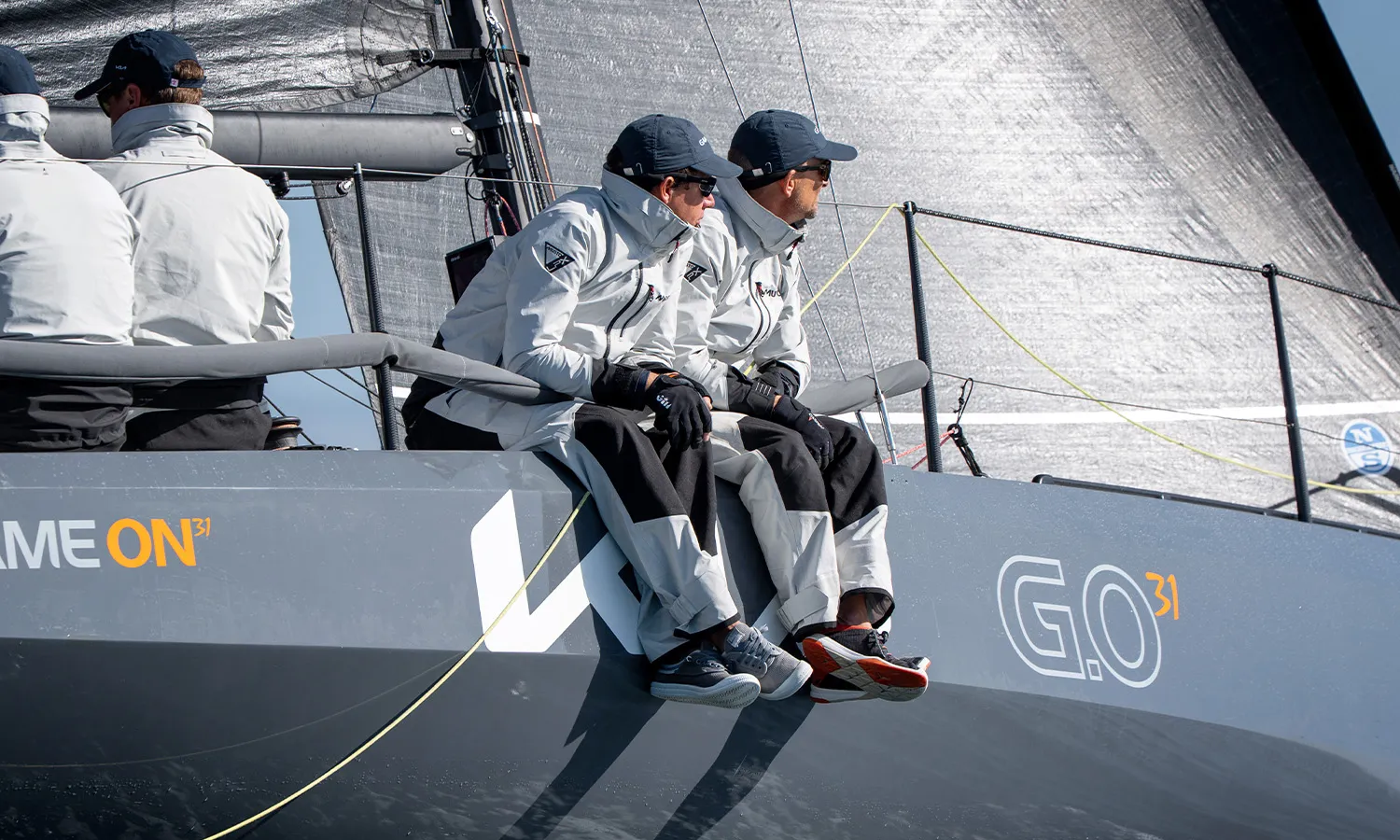
Image name: sailing-jacket-buying-guide-right-jacket-selection
ALT text: A sailor choosing the right sailing jacket for changing weather conditions on a boat
What do waterproof rating and breathability mean?
Waterproof rating (mm) and breathability (g/m²/24h) are the two most important technical values that define a sailing jacket’s performance. Understanding these figures helps you choose a jacket that truly works in Finland’s variable weather and demanding marine environment.
Waterproof rating is measured according to the EN ISO 811 standard. In the test, increasing water pressure is applied to the fabric until it starts to leak. The value is given in millimeters – for example, 20,000 mm means the fabric can withstand the pressure of a 20-meter water column. In sailing, this is critical, as spray and heavy rain create much higher pressure than ordinary rainfall on land.
Breathability indicates how much water vapor (sweat) the material allows to pass through in 24 hours per square meter. During active sailing, such as handling lines or maneuvers, perspiration can be significant. Without sufficient breathability, moisture condenses inside the jacket, making you feel damp and uncomfortable. A good sailing jacket offers at least 10,000–15,000 g/m²/24h breathability, while premium models reach 25,000 g/m²/24h or more.
Waterproof ratings in practice
In sailing, clothing is exposed to higher pressure than usual. Sitting on a wet deck or leaning against rails can create pressure of 5,000–8,000 mm on knees and elbows. Backpacks or life jacket straps can increase pressure on the shoulders even further. Therefore, sailing jackets require significantly higher waterproof ratings than standard outdoor jackets.
Membrane technologies in sailing jackets
Waterproofing and breathability in sailing jackets are based on membrane technologies. The membrane is a thin layer laminated to the inside of the fabric. It allows water vapor to escape while preventing water droplets from entering.
| Membrane technology | Waterproof (mm) | Breathability | Use case | Example products |
|---|---|---|---|---|
| Gore-Tex Pro (3-layer) | ~28,000–30,000 | Excellent (RET <6) | Offshore, ocean | Musto MPX Gore-Tex Offshore |
| eVent (3-layer) | ~24,000 | Excellent (RET <5) | Offshore, ocean | Zhik OFS800 |
| Helly Tech Performance (2-layer) | ~15,000–20,000 | Good | Coastal | Helly Hansen Skagen |
| Musto BR2 (2-layer) | ~30,000 | 15,000 g/m²/24h | Coastal, Baltic | Musto BR2 Offshore |
| PU membrane (2-layer) | ~10,000–15,000 | Moderate | Day boating | Basic boating jackets |
A 3-layer construction means the outer fabric, membrane, and lining are laminated together. This makes the jacket more durable and faster drying, but also more expensive. In a 2-layer construction, the membrane is bonded to the outer fabric and protected by a separate mesh lining. These are more affordable and often sufficient for Nordic conditions.
Layering for sailing
A sailing jacket is the outer layer in a layering system. It protects against wind and water but does not provide warmth on its own.
- Base layer: Worn next to the skin, its job is to wick moisture away. Avoid cotton; choose synthetic materials or merino wool.
- Mid layer: Provides insulation, typically fleece or technical garments.
- Outer layer: The sailing jacket, which protects against the elements.
The jacket should be roomy enough to fit layers underneath. A jacket that is too tight compresses insulation and reduces warmth. Always test fit with a life jacket as well.
Collars, hoods and key features
Details distinguish a high-quality sailing jacket from a standard raincoat.
- High collar: Protects neck and face from spray and wind
- Adjustable hood: Must stay in place in strong winds; often high-visibility yellow in offshore jackets
- Taped seams: Prevent water from entering through stitching
- Adjustable cuffs: Often double cuffs to seal wrists
- Reinforcements: On elbows and hem for durability
- Fleece-lined pockets: For warmth in cold conditions
Premium models may include advanced features like storm flaps or specialized visors for better visibility.
Women’s vs men’s sailing jackets
Women’s and men’s jackets differ mainly in fit and cut, although technical features are usually identical. Women’s models are tailored for better fit with shaped waists and adjusted proportions, improving comfort and mobility.
A proper fit is essential not just for comfort but also for safety. Loose jackets can let in cold air or catch on equipment.
Price ranges – what do you get?
- €150–300: Basic jackets for light use and coastal conditions
- €300–500: Quality inshore and entry-level offshore jackets (e.g. Musto BR2, Helly Hansen Skagen)
- €500–900: Professional offshore jackets with top-tier membranes like Gore-Tex Pro
Coastal vs offshore sailing
Inshore (coastal)
- Milder conditions
- 10,000–20,000 mm waterproof rating sufficient
- Lighter and more affordable jackets
Offshore
- Harsh, changing conditions
- 25,000–30,000 mm waterproof rating
- Heavy-duty construction and maximum protection
Care and maintenance
Proper care extends the life of your sailing jacket.
- Wash with mild detergent for technical fabrics
- Avoid fabric softener
- Close zippers and Velcro before washing
- Reapply DWR treatment when water stops beading
Seasonal use in Finland
- Spring: Cold water, use full layering
- Summer: Light layers, but keep jacket ready for sudden weather changes
- Autumn: Strong winds and rain, full layering essential
Frequently asked questions
What waterproof rating is enough?
10,000–15,000 mm for coastal use, 20,000+ mm for offshore.
2-layer vs 3-layer?
3-layer is more durable and breathable; 2-layer is more affordable.
Shell or insulated jacket?
Shell jackets are better for active use due to flexibility and breathability.
How often should I wash it?
After the season or when dirty. Rinse saltwater after each use.
Best brands?
Musto, Helly Hansen, and Zhik are among the most respected.
Can one jacket be used year-round?
Yes, with proper layering.
How to choose the right size?
Ensure mobility, proper sleeve length, and fit with layers and life jacket.
Find your sailing jacket at Marinekauppa
The right sailing jacket is an investment in comfort and safety. Choose according to your needs: a lighter inshore model for coastal sailing or a high-performance offshore jacket for demanding conditions.
Explore our selection of sailing jackets for men and women from leading brands and order easily online.
Sources and further information
- ISO 811:2018 – Waterproof testing standard
- Gore-Tex – Membrane technology
- Musto – Product specifications
- Helly Hansen – Helly Tech technology
- Vendée Globe – Offshore gear testing in extreme conditions