Different Types of Mooring Buoy Lines
1. Floating Buoy Lines
Floating buoy lines are typically made from polypropylene, a lightweight material that floats on the surface. They are ideal when the rope needs to remain visible and avoid getting caught in the propeller. Floating ropes are easy to handle, though not as abrasion-resistant as heavier rope materials.
2. Sinking Buoy Lines
Sinking buoy lines are usually made from polyester or nylon, both heavier materials with excellent strength and abrasion resistance. Their durability makes them suitable for larger boats and demanding conditions. A drawback is that they are harder to spot in the water.
3. Elastic Buoy Lines
Elastic buoy lines contain stretchable material that allows the rope to extend. This elasticity reduces the stress caused by waves and wind on both the rope and the boat’s attachment point. They improve safety in windy conditions and reduce wear but are often more expensive than standard ropes.
4. Combination Lines
Combination (combo) lines combine floating and durable features. Typically, the outer sheath is abrasion-resistant while the core is made of buoyant material. These lines work well in both fresh and saltwater. They strike a good balance between durability and buoyancy, though their more complex construction may increase cost.
5. Polyester Buoy Lines
Polyester lines are highly durable and well-suited to saltwater and UV exposure. They are popular due to their low stretch and excellent longevity. Polyester is heavier than polypropylene, but its stability makes it an excellent choice for permanent mooring.
6. Nylon Buoy Lines
Nylon lines are known for strength and elasticity. They are ideal for larger boats or rough conditions where the rope’s stretch helps absorb shock loads from waves. However, nylon can weaken over time when exposed to saltwater and sunlight.
7. Ready-Made Buoy Line Packs
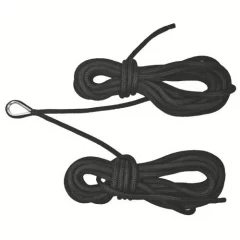
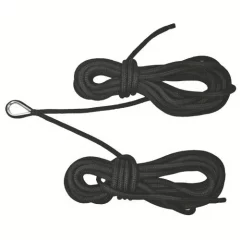
Ready-made buoy line kits often include pre-tied loops, splices, or metal fittings. They are quick and easy to use with no extra preparation needed. These are great for hobby boaters who want a hassle-free setup. The downside is reduced customization.
8. Heavy-Duty Lines for Large Vessels
Lines made for large and heavy boats are thick and extremely strong, built from materials designed to withstand high loads and continuous abrasion. These are typically used in professional or commercial boating. Their drawbacks include weight and higher cost.
Different buoy line types provide solutions for various boats and conditions, so the choice should be based on vessel size and mooring environment.
How to Moor a Boat to a Mooring Buoy
Mooring your boat to a buoy ensures your vessel stays safely in place in a harbor or anchorage. Follow these steps for safe and easy mooring:
1. Preparation
-
Check equipment: Ensure you have a buoy line of suitable length and strength for your boat.
-
Prepare the bow line: Attach the bow line to the bow cleat so it’s ready for immediate use.
-
Set fenders: Place fenders along the side of the boat to prevent damage when approaching the buoy.
2. Approaching the Buoy
-
Go slowly: Approach the buoy slowly and in control, preferably into the wind or current for better maneuverability.
-
Position the buoy alongside: Maneuver the boat so the buoy is within easy reach from the side.
3. Securing the Buoy Line
-
Use a mooring hook: Capture the buoy’s attachment point with a boathook.
-
Thread the buoy line: Feed one end of the line through the buoy’s eye or attachment ring. Ensure it runs smoothly without knots or tangles.
-
Tie to the boat: Secure the line to a bow cleat using an appropriate knot, such as a cleat hitch.
4. Checking the Mooring
5. Final Check
-
Test holding: Apply slight tension to ensure the knot and rope are secure.
-
Monitor conditions: In changing weather or increasing waves, check the mooring regularly and adjust if needed.
Tips for Safe Mooring to a Buoy
-
Choose a durable line suitable for your vessel
-
Learn essential knots such as the bowline and cleat hitch
-
Move slowly and avoid sudden maneuvering
-
Use fenders for added protection
Buoy Lines for Your Boat from Marinekauppa
Mooring your boat to a buoy becomes easy and secure with the right equipment. Order buoy lines, hooks, and other accessories conveniently from Marinekauppa, or visit our store!