Sealants
Versatile sealants for boat use. Special compounds for below and above the waterline.Sealants group products
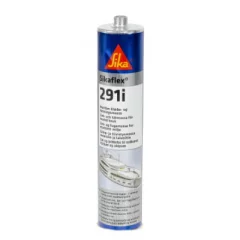
Sikaflex 291 black is an excellent general purpose sealant. A versatile and flexible marine sealant that bonds all standard materials used in boat building. Its superior flexibility ensures a durable and long-lasting seal, similar to other Sikaflex Marine sealants and adhesives. Sikaflex 291 is a single-component, easy-to-use and highly elastomeric product.
Note! For underwater sealing, it is recommended to use Sikaflex 591 sealant or Sikaflex 292i adhesive .
Use: The product is suitable for sealing various movement joints as an elastic and vibration-absorbing material and for numerous sealing applications. The product reliably bonds and seals materials used in the boat and shipbuilding industry. The product is suitable for wood, metal, metal primer and paint surfaces (2-K), ceramics and certain plastics (e.g. fiberglass, etc.).
PRODUCT BENEFITS
- Helm marked
- 1-component
- Very elastic
- Mild scent
- Does not cause corrosion
- Limited overpaintability
- Adheres well to most material surfaces for marine use
- Does not contain solvents
- Very low VOC
- Low isocyanate content
APPLICATIONS
SIKAFLEX 291i black is a multi-purpose product for marine applications. The product is suitable for elastic and vibration-damping sealing of joints and for use in numerous interior sealing applications. Sikaflex 291i adheres particularly well to material surfaces commonly used in marine structures, such as wood, metals, metal primers and paint surfaces (2-K systems), ceramic materials and plastics (reinforced plastic, etc.). Sikaflex 291i is not suitable for sealing plastic types sensitive to stress cracking (e.g. acrylic and polycarbonate plastics, etc.). The product should be tested on actual material surfaces and under operating conditions to ensure adhesion and compatibility properties.
CURING METHOD / DRYING TIME
Sikaflex 291i black dries through due to the influence of air humidity. At low temperatures, air humidity decreases, causing the adhesive to dry through more slowly.
CHEMICAL RESISTANCE
Sikaflex 291i is generally resistant to water, seawater, diluted acid and diluted alkali solutions. It is temporarily resistant to fuels, mineral oils, vegetable and animal fats and oils. It is not resistant to organic acids, glycol alcohols, concentrated mineral acids and alkaline solutions or solvents.
USING THE PRODUCT
Surface preparation
Surfaces must be clean, dry and free from grease, oil and dust. The use of adhesion promoters significantly improves the long-term adhesion of the compound. Material surface-specific suggestions for adhesion promoters can be found in the current Sika Pre-treatment Chart for the product range. The suggestions are based on our experience but must always be confirmed by carrying out adhesion tests on real material surfaces to ensure long-term adhesion.
INTENDED USE
Sikaflex 291i can be applied in the temperature range of 10 °C - 40 °C, taking into account changes in drying speed and application properties. Optimal application conditions are achieved when the material surface and mass temperature are between 15 °C and 25 °C. It is recommended to use a piston-operated gun (manual, pneumatic or battery-operated) to dispense the Sikaflex 291i cartridge.
Seam finishing
The joint must be finished within the open time specified for the product. The recommended finishing agent is Sika® Tooling Agent N. The user must check/ensure the suitability/compatibility of other finishing agents before use.
Stain removal
Uncured Sikaflex 291i can be removed from tools and equipment with Sika® Remover-208 or another suitable solvent. Once dried, the product can only be removed mechanically. Hands and other contaminated skin should be cleaned immediately with Sika® Cleaner-350H or a suitable industrial detergent and water (no solvents).
Overpainting
Sikaflex 291i is best overcoated after the skinning period. Paint adhesion can be improved by wiping the joint surface with Sika® Aktivator-100 or Sika® Aktivator-205 before painting. If the paint requires baking (> 80 °C), the best result is achieved when the compound is allowed to dry thoroughly before overpainting. Overpainting tests should be carried out in advance on the customer's painting line for all types of paint intended for use. The elasticity of the dried paint film is usually lower than that of the sealant, which can lead to breakage of the paint film in the area of ??the expansion joint.
MORE INFORMATION
The information provided is intended as a general guide only. For more detailed instructions, please refer to the packaging and manufacturer's instructions.
- Color: navy black
- Size: 300ml, cartridge
- Benefits/features:
- Recommended primarily for locations above the waterline
- 1-component
- Elastic
- Mild scent
- Weather and aging resistant
- Does not cause corrosion
- Can be overpainted with many different types of paint
- Sandable
- Reliably glues and seals various material surfaces
- Acts as an electrical insulator.
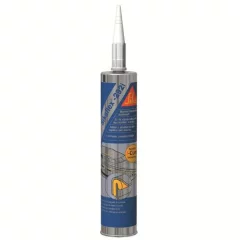
Multi-purpose adhesive for Marine applications.
Sikaflex®-292i is a non-sag 1-K polyurethane-based thixotropic paste-like adhesive, drying under the influence of atmospheric humidity. The product has excellent bonding properties and good mechanical strength. Sikaflex®-292i meets the requirements of the International Maritime Organization (IMO) flame spread test.
Sikaflex 292i is suitable for use in structural joints in Marine applications that may be exposed to high dynamic loads. The product is suitable for bonding metals, especially aluminum (including anodized grades), metal primers and paint surfaces (2-K systems) or ceramic materials, plastics such as GRP (unsaturated polyester resin), ABS, etc. Please consult the manufacturer's advice in advance and carry out tests on original material surfaces before using Sikaflex®-292i on plastic grades susceptible to stress cracking.
- Good gap filling properties
- Limited overpaintability
- Adheres well to most material surfaces
- Helm marked
- Solvent-free and very low VOC
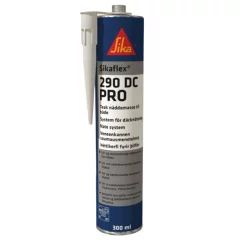
Sikaflex-290 DC PRO has been developed for wood and teak decks that need to be completely waterproof and weatherproof. This very easy to use, one-component polyurethane sealant with excellent UV resistance can be sanded down to the deck surface after curing, giving a clean and beautiful finish.
For professional use only.
USE:
Sikaflex®-290 DC PRO has been specially developed for sealing wooden decks on boats and ships. The product is resistant to fresh and seawater. The product is used in combination with Sika® Primer-290 DC.
BENEFITS/FEATURES:
Sandable
- Excellent weather resistance
- Suitable for varying operating conditions
- For business use only
- IMO approved
- Color: navy black
- Size: 300ml
- 1-component
- Polyurethane-based sealant
- Especially for seams in wooden boat/ship decks
- Areas of use:
- Lid sealing
- Deck leveling and priming
- Benefits/features:
- Sandable
- Excellent weather resistance
- For variable weather conditions
- IMO approved
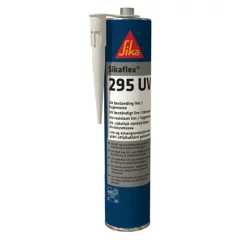
For external joints and bonding of plastic windows in marine applications Sikaflex®-295 UV is a non-sag 1-K polyurethane-based adhesive that dries with the influence of atmospheric humidity. The product is suitable for use in internal and external sealing applications and for bonding plastic windows in marine applications. Sikaflex®-295 UV meets the requirements of the International Maritime Organization (IMO) flame spread test.
Sikaflex®-295 UV has been specially developed for use in the marine industry to bond and seal plastic windows in boats and ships. Due to its excellent weather resistance, the product is also suitable for use in external sealing joints. Suitable material surfaces include aluminium (clear or anodised), reinforced plastic (polyester resin), stainless steel, wood, 2-component coatings and plastic windows (Polycarbonate PC, Acrylic PMMA). Please read the manufacturer's instructions and carry out tests on original material surfaces before using Sikaflex®-295 UV on plastic grades that are sensitive to stress cracking. This product is intended for professional use only. The product should be tested on actual material surfaces and operating conditions to ensure adhesion and compatibility properties.
Surface preparation
Surfaces must be clean, dry and free from grease, oil, dust and contaminants. Surface adhesion treatments depend on the properties of the material surfaces and are crucial for the long-term performance of the adhesive bond. Suggestions for adhesion treatments can be found in the current Sika® Pre-Treatment Chart for the product range. Please note that the adhesion treatment suggestions given are based on practical experience and must be confirmed by performing adhesion tests on the material surfaces to be used.
Application
Sikaflex®-295 UV can be applied in a temperature range of 10 °C – 35 °C (environment and product), taking into account the effect of the prevailing temperature on the reactivity of the adhesive mass and the application properties. The recommended bonding temperatures (material surfaces, air and adhesive mass) are between 15 °C – 25 °C.Please note that the viscosity of the adhesive increases at low temperatures. To ensure easy application, the product temperature should correspond to the ambient conditions before use. To ensure sufficient layer thickness of the adhesive joint, we recommend applying the joint with a triangular cross-section.
Diffusion
It is recommended to use a powerful piston-operated gun (manual, pneumatic or battery-operated) or a pump device to dispense Sikaflex®-295 UV. The open time of the adhesive is significantly shorter in warm and humid air. Bonding should always be carried out within the open time. Never bond if the joint surface has already become skinned.Seam finishing
The joint must be finished within the open time specified for the product. The recommended finishing agent is Sika® Tooling Agent N. The user must check/ensure the suitability/compatibility of other finishing agents before use.Stain removal
Uncured Sikaflex®-295 UV can be removed from tools and equipment with Sika® Remover-208 or another suitable solvent. Once dried, the product can only be removed mechanically. Hands and other contaminated skin should be cleaned immediately with Sika® Cleaner-350H or a suitable industrial detergent and water (no solvents).Overpainting
Sikaflex®-295 UV can best be overcoated within the skin time. If overcoating is done after the surface of the compound has dried, the adhesion of the paint to the joint can be improved by wiping it with Sika® Aktivator-100 or Sika® Aktivator-205 beforehand. If the painting process requires baking (> 80 °C), the best result is achieved by letting the compound dry through first. Overcoating tests should be carried out in advance on the customer's painting line for all paint types intended for use.The elasticity of a dried paint film is usually lower than that of the sealant, which can lead to the paint film breaking in the expansion joint area.
- For sealing windows and other areas exposed to UV radiation
- Suitable for bonding and sealing plastic windows
- Excellent spreading properties
- Good weather and aging resistance properties
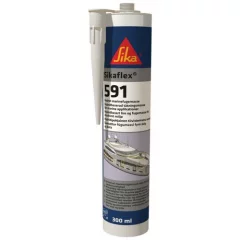
Sikaflex®-591 is a sealant based on Sika's Silane Terminated Polymer (STP) technology. The product's excellent resistance to harsh marine conditions makes it very versatile, making it suitable for a wide range of marine applications. Sikaflex®-591 exceeds general environmental and safety standards, setting a new standard from an ecological perspective. Sikaflex®-591 meets the requirements of the International Maritime Organization (IMO) flame spread test (FTP Code Part 5).
- Glues and seals
- Sandable and paintable
- 300ml
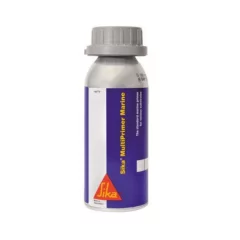
The suitability of Sika MultiPrimer Marine for material surfaces / application conditions must be tested in advance to ensure good adhesion and material compatibility.
Sika MultiPrimer Marine is manufactured in accordance with ISO 9001 / 14001 quality control and environmental standards and in compliance with the responsible care program.
Areas of use: Sika MultiPrimer Marine is used to improve the adhesion of adhesives/sealants on the following material surfaces:
Aluminum
Steel
Galvanized steel
Non-ferrous metal
Teak
Mahogany
Oregon pine
Cap
For professional use only.
- Size 250ml
- For metal and wood
- Suitable for Sikaflex 1-component compounds
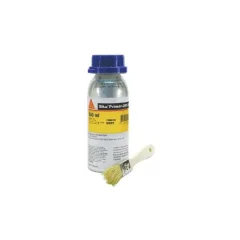
Sika® Primer-290 DC is a translucent yellowish, moisture-curing liquid adhesion primer. The product has been developed for use on the underside of wooden battens attached to the deck of a boat (glued to the deck with Sikaflex® - 298) and in deck grooves (sealed with Sikaflex® -290iDC).
For professional use only. The suitability of Sika® Primer-290 DC for the material surfaces / application conditions must be tested in advance to ensure good adhesion and material compatibility.
Areas of application: Sika® Primer-290 DC is used to improve the adhesion of adhesives/sealants on the following material surfaces:
- Teak
- Mahogany
- Oregon pine
- Cap
- Fiberglass (GRP)
- Adhesion primer for adhesion treatment of seamed/glued areas of a boat's wooden deck
- Size: 250ml
- Suitable for Sikaflex 290DC Pro or Sikaflex 298FC products
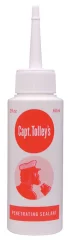
Finds and blocks leaks. Fills hairline cracks.
- Blocks hairline cracks
- Liquid composition

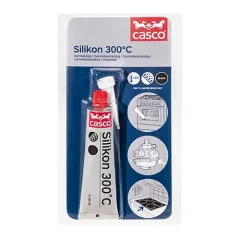
Replaces or supplements seals. Temperature resistant from -60° to +250°C. Resistant to high pressure, brake fluids, fuels, glycol and water.
- Liquid sealant
- Withstands high pressure
- Withstands temperature range from -60° to +250°C
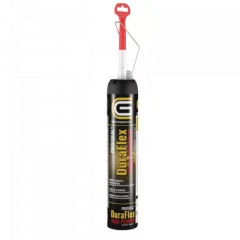
1-component, high-quality elastic adhesive, sealing and jointing compound, which is slightly firmer than ordinary adhesives, has stronger bonding and is very mechanically durable. M1 and Emicode EC1 Plus indoor air classification.
- General bonding, installation and sealing
- Suitable for both indoor and outdoor use
- Can be painted over. Mould-resistant.
- Adheres even to damp surfaces
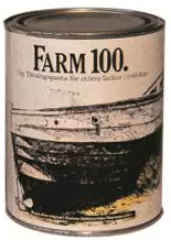
Sealant for leaks in wooden boats. Elastic, thick, rubber-based. Farm 100 is intended for sealing larger gaps.
- For leaks in wooden boats
- Elastic
- Three different types (Farm 50, 80 and 100)

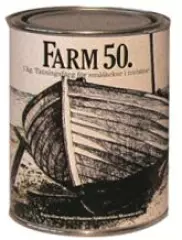
For leaks in wooden boats. Elastic, thick, rubber-based. Farm 50 is intended for sealing small gaps.
- For leaks in wooden boats
- Elastic
- Three different types (Farm 50, 80 and 100)
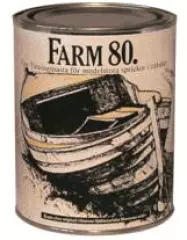
For leaks in wooden boats. Elastic, thick, rubber-based. Farm 80 is intended for sealing medium-sized gaps.
- For leaks in wooden boats
- Elastic
- Three different types (Farm 50, 80 and 100)
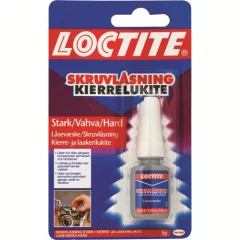
Permanent locking and sealing. Suitable for example for screws, frame and crankshaft bearings, pulleys and gearbox screws. Hardens in three hours and is resistant to water, oils, diesel, petrol, glycol and more. Maximum temperature +150ºC. Can be disassembled if parts are heated."
- Permanent locking and sealing
- Suitable for screws
- Cures in three hours
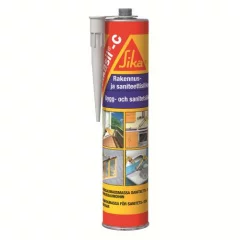
One-component neutral-curing, highly elastic silicone. Does not contain vinegar or corrosive substances. The surface hardens in about 15 minutes. Due to its elasticity, the substance can also withstand movement. Treated with a mold remover, not suitable for painting over.
- Single-component
- Elastic
- Not suitable for painting over
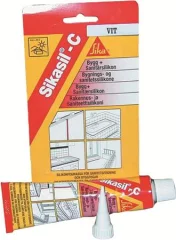
One-component neutral-curing, highly elastic silicone. Does not contain vinegar or corrosive substances. The surface hardens in about 15 minutes. Due to its elasticity, the substance can also withstand movement. Treated with a mold remover, not suitable for painting over.
- 1-component
- Elastic
- Not suitable for painting over
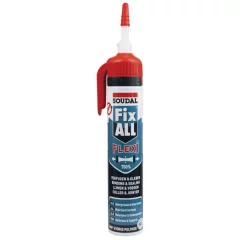
Fix All Flexi Press Pack in an easy-to-use press pack, eliminating the need for a press. An excellent solution for areas where a sealant press cannot reach.
Fix All is a 1-component, high-quality, adhesive and sealant. MS polymer-based, chemically neutral and fully elastic. For general industrial use, automotive, shipbuilding and aircraft industries where an elastic adhesive and sealant with high adhesive strength is required. Contains no isocyanate, solvents, halogens or corrosive substances.
For all boat bonding and sealing
- No need for a separate press
- Grips even on wet surfaces
- Good UV resistance
- Elastic
- Easy-to-use pressure pack
- No press required
- An excellent solution for areas where a grouting gun cannot reach.
- Non-toxic
- Odorless
- Package size: 200 ml

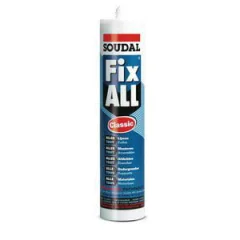
1-component, high-quality, adhesive and sealant with good bonding strength. MS polymer-based, chemically neutral and fully elastic. For general industrial use, automotive industry, shipbuilding and boatbuilding when an elastic adhesive and sealant with high bonding strength is required. Does not contain isocyanate, solvents, halogens or corrosive substances.
Available in the following colors:
Black
- White
- Brown
- Gray
- Odorless
- Size: 290ml
Fix All Classic is a one-component, high-quality adhesive and sealant with good bonding strength. It is based on MS polymer, is chemically neutral and fully elastic. In an easy-to-use, Press Pack, pressure package, so no press is needed. An excellent solution for areas where the sealant press cannot reach. Colorless and non-toxic.
Features:
- Replaces silicone compounds, board adhesives, mirror adhesives, wood adhesives, leveling putties, sealants and PU compounds.
- Withstands mechanical stress.
- Remains elastic after drying.
- No bubbles form inside the paste at high temperatures and on damp surfaces.
- Can be painted over with most water-based paints.
- Ecological and safe for work: does not contain isocyanate, solvents, halogens or corrosive substances. Odorless.
- Easy to extrude and finish even at low temperatures.
- Keeps its color – UV resistant.
- Resistant to many chemicals, anti-mold.
- Does not stain porous surfaces such as natural stone, marble and granite.
Applications:
- General industrial use
- Auto industry
- Ship and boat building
- Aircraft industry
- Construction and renovation work
- Metal industry
- Carpentry industry
- Air conditioning and HVAC installations
- Interior and finishing work
- Adhesive and sealant
- Size: 290ml
- Press Pack, pressure packaging - easy to use and long shelf life
- Single-component
- Colorless and non-toxic
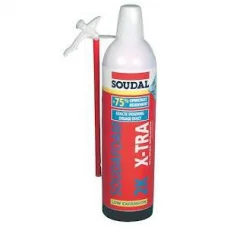
Two-component, chemically curing polyurethane foam. Seals, strengthens and is water resistant.
- Net content: 400ml


