Finnish Flag 100x163cm
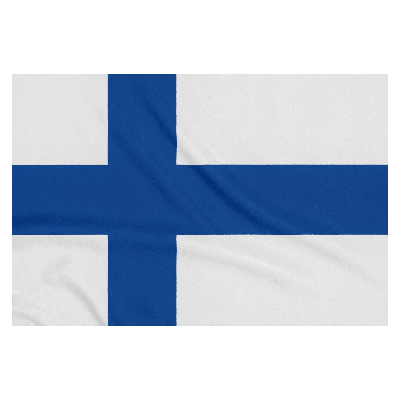
- Size: 100 x 163cm
- Boat ticket
- Recommended flagpole length from the top of the flag: 210cm
- Material: polyester
The most valuable place on a boat is its stern. Therefore, the stern flag should be larger than other flags and pennants and should be on a flagpole tilted 10–15 degrees at the stern. This is always possible in a harbor, and in most types of boats, the flag will also fit on the stern pole at sea. In that case, the pole should be in a place where the flag does not interfere with the visibility of the stern light and cannot get dirty from exhaust fumes or touch dirty objects, such as an outboard motor mounted on the railing. Obstacles to using a stern pole at sea can include, for example, a long low boom on a sailboat that would catch on the flagpole, or a high deck structure on a motorboat that causes the flag to wrap around the flagpole during sailing, preventing the flag from fulfilling its most important function: visibility.
According to the general flag-raising instructions, the flag is raised at 8:00 and lowered at sunset, but no later than 21:00. The exception is Midsummer, when the flag-raising begins on Midsummer Eve at 18:00 and ends on Midsummer Day at 21:00. On Independence Day, the flag-raising ends at 20:00. Respect for the flag must be shown by raising and lowering it calmly. Good manners require that there is silence on the boat at this time. When several boats are together, the flag ceremony should be carried out simultaneously, for example by means of a signal. A pleasure craft must keep its stern flag raised while underway, regardless of the time of day. A manned pleasure craft must follow the general flag-raising instructions when moored to shore or a buoy or when at anchor. A competing boat shall not raise its stern flag unless otherwise specified in the competition instructions. When the competition has ended or been interrupted, the stern flag must be raised immediately. The flag must always be clean and intact.
Tuotenr: 9519010100
Valmistajan tuotenr: 81B07+BLIST27
- Size: 100 x 163cm
- Boat ticket
- Recommended flagpole length from the top of the flag: 210cm
- Material: polyester
The most valuable place on a boat is its stern. Therefore, the stern flag should be larger than other flags and pennants and should be on a flagpole tilted 10–15 degrees at the stern. This is always possible in a harbor, and in most types of boats, the flag will also fit on the stern pole at sea. In that case, the pole should be in a place where the flag does not interfere with the visibility of the stern light and cannot get dirty from exhaust fumes or touch dirty objects, such as an outboard motor mounted on the railing. Obstacles to using a stern pole at sea can include, for example, a long low boom on a sailboat that would catch on the flagpole, or a high deck structure on a motorboat that causes the flag to wrap around the flagpole during sailing, preventing the flag from fulfilling its most important function: visibility.
According to the general flag-raising instructions, the flag is raised at 8:00 and lowered at sunset, but no later than 21:00. The exception is Midsummer, when the flag-raising begins on Midsummer Eve at 18:00 and ends on Midsummer Day at 21:00. On Independence Day, the flag-raising ends at 20:00. Respect for the flag must be shown by raising and lowering it calmly. Good manners require that there is silence on the boat at this time. When several boats are together, the flag ceremony should be carried out simultaneously, for example by means of a signal. A pleasure craft must keep its stern flag raised while underway, regardless of the time of day. A manned pleasure craft must follow the general flag-raising instructions when moored to shore or a buoy or when at anchor. A competing boat shall not raise its stern flag unless otherwise specified in the competition instructions. When the competition has ended or been interrupted, the stern flag must be raised immediately. The flag must always be clean and intact.
Tuotenr: 9519010100
Valmistajan tuotenr: 81B07+BLIST27
Suosittelemme sinulle


