Connection Rails
Busbars, connectors, rails and other components from the online store!Connection Rails -ryhmän tuotteet
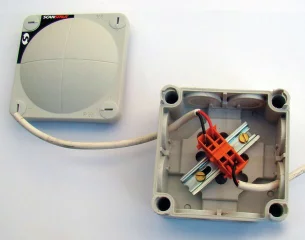
'Deluxe' version - 10 quick connectors

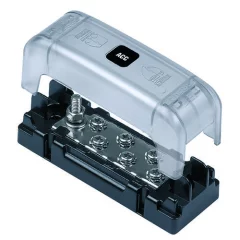
Earth terminal that can be connected to fuse box 70905 and 70906, allowing for a cleaner and more compact installation. Includes transparent protective cover. 6 terminals. 1 connection, 5 mm. Maximum 100A total. Dimensions: 35 x 90 x 47 mm.
- Ground connection
- Max 100A total
- Dimensions: 35x90x47mm

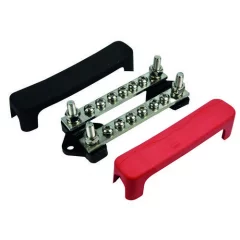
Double mounting rail with protective cover (black and red) from BEP. Conductive parts made of tin-plated brass. Terminal screws (4mm) made of stainless steel. 2 bolts (6mm) made of stainless steel in each terminal.
- Connector diameter: 6mm
- Screw diameter: 4mm
- Maximum current: 100A
- Screws: 2x6pcs
- Length: 113mm
- Width: 42mm
- Height: 29mm
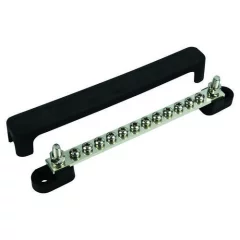
BEP connection plug with protective cover
Conductive parts made of copper-plated brass
Terminal screws (4mm) stainless steel
2 pcs bolts (6mm) stainless steel
Connector height: 29mm
- Conductive parts made of copper-plated brass
- Terminal screws 4mm
- Available in several sizes
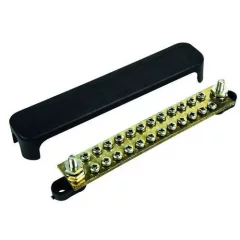
BEP connection rail with protective cover. Conductive parts made of tin-plated brass. Connection screws (4mm) made of stainless steel. 2pcs bolts (6mm) made of stainless steel. Connection point height: 29mm
- Conductive parts made of tin-plated brass
- Connector screws 4mm
- Several sizes available
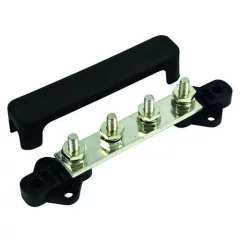
Switch plug from BEP with protective housing. Conductive parts are copper-plated brass.
The package contains 4 screws (6mm) made of stainless steel.
The height of the switch plug is 29mm
- Conductive parts made of copper-plated brass
- 4 pieces of screws
- Protective case included
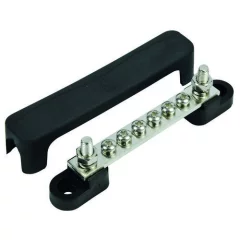
BEP connection rail with protective cover. Conductive parts made of tin-plated brass. Connection screws (4mm) made of stainless steel. 2pcs bolts (6mm) made of stainless steel. Connection point height: 29mm
- Conductive parts made of tin-plated brass
- Connector screws 4mm
- Multiple sizes available
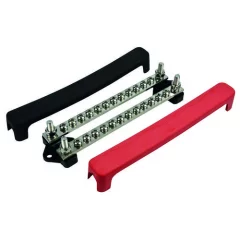
Double terminal blocks with protective covers (black and red) made of tin-plated brass. Terminal screws (4mm) made of stainless steel. Terminal height: 29mm
- Conductive parts made of tin-plated brass
- Connector screws 4mm
- 2 pcs 6mm bolts
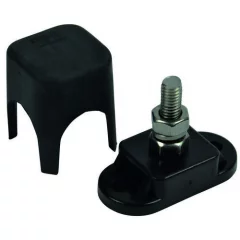
Insulated black terminal block with protective cover from BEP.
- 6mm bolt (1/4").
- Negative (black)
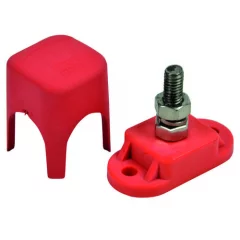
Insulated red terminal block with protective cover from BEP.
- 6mm bolt (1/4")
- Positive (red)
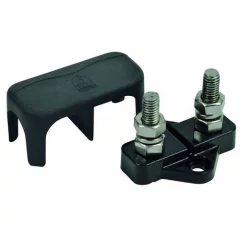
Insulated black terminal block with protective cover from BEP.
- 2pcs 6mm bolts (1/4")
- Negative (black)
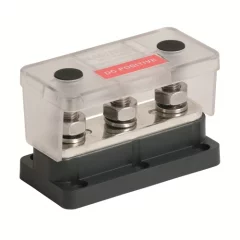
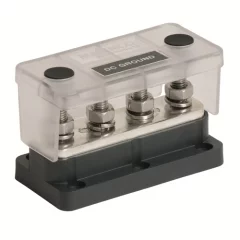
Conductive parts made of tinned copper. Compact design that saves space. Polycarbonate lock. Long connection screws. Stainless screws, washers and bolts. Withstands up to 50V. BEP Pro Installer is a completely new concept for electrical installations on boats. With the help of connection pieces, Pro Installer components can be connected without cables, making installations more durable, neater and more compact.
- Connection rail
- Max 650A
- Dimensions: 98x49mm
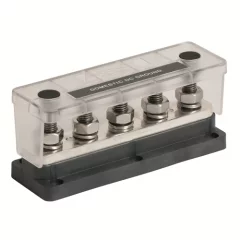
Conductive parts made of tinned copper. Compact design that saves space. Polycarbonate lock. Long connection screws. Stainless screws, washers and bolts. Withstands up to 50V. BEP Pro Installer is a completely new concept for electrical installations on boats. With the help of connection pieces, Pro Installer components can be connected without cables, making installations more durable, neater and more compact.
- Connection rail
- Max 500A
- Dimensions: 98x49mm
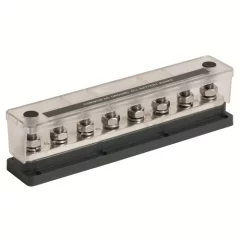
Conductive parts made of tinned copper. Compact design that saves space. Polycarbonate lock. Long connection screws. Stainless screws, washers and bolts. Withstands up to 50V. BEP Pro Installer is a completely new concept for electrical installations on boats. With the help of connection pieces, Pro Installer components can be connected without cables, making installations more durable, neater and more compact.
- Connection rail
- Max 650A
- Dimensions: 147x49mm
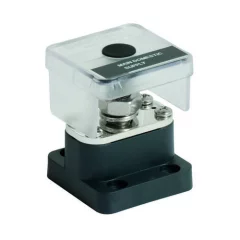
Conductive parts made of tinned copper. Compact design that saves space. Polycarbonate lock. Long connection screws. Stainless screws, washers and bolts. Withstands up to 50V. BEP Pro Installer is a completely new concept for electrical installations on boats. With the help of connection pieces, Pro Installer components can be connected without cables, making installations more durable, neater and more compact.
- Connection rail
- Max 650A
- Dimensions: 249x49mm
BEP Single-position connector with distribution plate. Compact design that saves space. Distribution plate with 4 pcs 4mm connection positions. Withstands up to 50A per connector (max 4 x 50A). Polycarbonate lock. Long connection bolt, nut and washer. Withstands up to 50V. BEP Pro Installer is a completely new concept for boat electrical installations. With the help of connection pieces, Pro Installer components can be connected without cables, making installations more durable, neater and more compact.
- Connection terminal
- Max 4x50A
- Dimensions 49x49mm
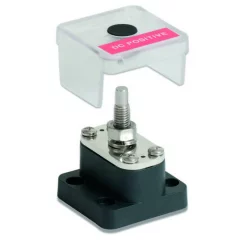
BEP connector with splitter and cover. Compact design, saves space. Polycarbonate lock. Long stainless steel connection bolts, nuts and washers. Withstands up to 50A (max. 4x50A). Bep Pro Installer is a completely new concept for boat electrical installations. With the help of the connectors, Pro Installer components can be connected without cables, making installations more durable, neater and more compact. Perfect for installation in marine conditions.
- Connection terminal
- Max 4x50A
- Dimensions: 49x49mm
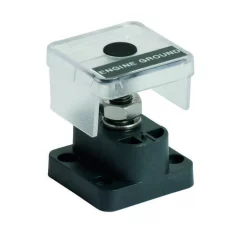
Single-position BEP connector. Compact design that saves space. Polycarbonate lock. Long stainless steel connection bolt, nut and washer. Withstands up to 50V. BEP Pro Installer is a completely new concept for boat electrical installations. The connectors allow Pro Installer components to be connected without cables, making installations more durable, neater and more compact.
- Compact design saves space
- Stainless bolt, nut and washer
- Withstands up to 50V
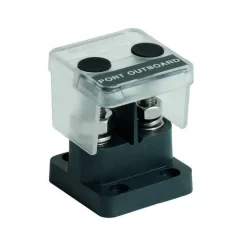
BEP double connector head.
Compact design, saves space
Polycarbonate cover
Long connection screws
Stainless bolts, nuts and washers
Withstands up to 50V
BEP Pro Installer is a completely new concept in marine electrical installations. Pro Installer components can be connected to each other without wires, making installations more durable, cleaner and more compact. Perfect for marine installations.
- Double connector
- 1x10mm and 1x8mm
- Dimensions: 49x49mm
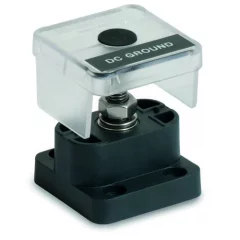
BEP single-position connector. Compact design, saves space. Polycarbonate lock. Long stainless steel connection bolts, nuts and washers. Withstands up to 50A (max. 4x50A). Bep Pro Installer is a completely new concept for boat electrical installations. With the help of the connectors, Pro Installer components can be connected without cables, making installations more durable, neat and compact. Perfect for installation in marine conditions.
• Compact design saves space
• Stainless steel bolt, nut and washer
• Withstands up to 50V


