Outlets and Sockets
Outlets and Sockets -ryhmän tuotteet
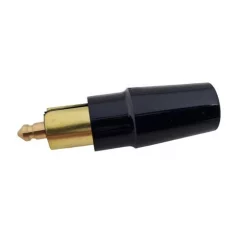
- Length: 56mm
- Hub diameter: 12mm

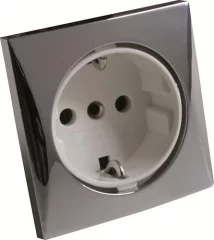
Wall socket 250 volts.
Dimensions: 60x60 mm.
Hole size: 45 mm.
Immersion depth: 35 mm.

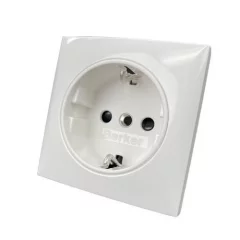
Wall socket 250 volts.
Dimensions: 60x60 mm.
Hole size: 45 mm.
Immersion depth: 35 mm.
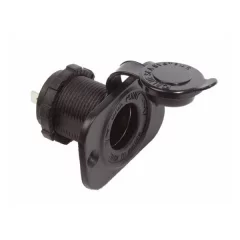
FEATURES:
- Includes waterproof protective cap, easy to install
- Designed to withstand the rigors of wet conditions, tolerates constant vibration
- Large contact areas ensure good electrical conductivity
- Twist Lock locking system securely locks the plug into the socket
- Built-in strain relief and cable gland
- All current-carrying parts made of nickel-plated copper alloy
- Maximum voltage: 12V DC
- Mounting hole dimensions: 28.6mm round hole
- Maximum current: 15A
- Manufacturer: Blue Sea
- Manufacturer's product code: 1011

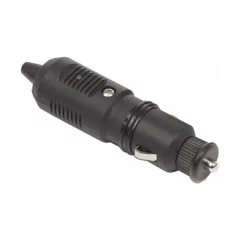
- Moisture-tight construction, sealing ring around the body keeps saltwater spray out of the internals and ensures a good tight fit in the socket
- 'ON' LED indicator
- Built-in strain relief and cable gland
- Built-in 10 A fuse
- Designed to withstand the rigors of wet conditions, tolerates constant vibration
- Large contact areas ensure good electrical conductivity
- Twist Lock locking system - the plug locks into the socket
- All current-carrying parts made of nickel-plated copper alloy
- Front panel, rear panel or surface mount installation
- Voltage: 12V DC
- Built-in 10 A fuse
- LED indicator light
- Manufacturer: Blue Sea
- Manufacturer's product code: 1010
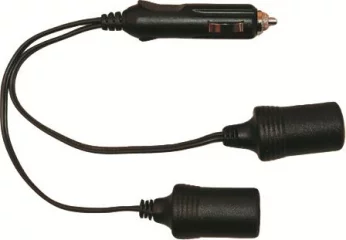
• Two power outlets
• 10A
• Length: 365mm
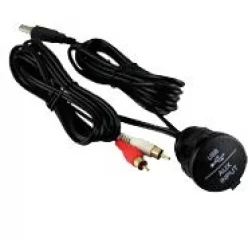
Feed-through plug for radios and music players where the USB and AUX connectors are located on the back of the device.

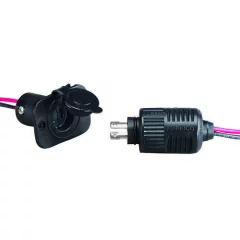
- Withstands up to 40A
- The package includes a female connector/panel and a plug/male
- 2-pin connectors, cables not included
- ConnectPro system
- 2-pole
- For trolling motor
- O-ring seal

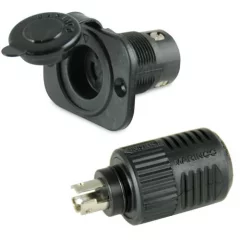
- Withstands up to 40A
- For 12V, 24V and 36V systems
- The package includes a female connector/panel and a plug/male
- 3-pin connectors, cables not included
- ConnectPro system
- 2-pole
- For trolling motor
- For bow thrusters
- O-ring seal
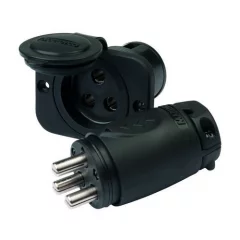
Maximum current: 70 A.
Universal model for 2 or 3-pole, 12, 24, 36, 48, 12/24 or 24/36 volts.
The plug has an O-ring seal and cable strain relief.
• For trolling motor
• O-ring seal
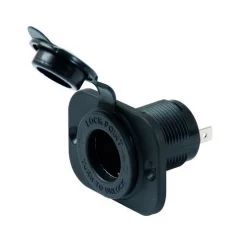
• Max 15 amps
• SeaLink locking system
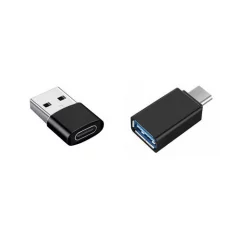
USB-A-USB-C
USB-C - USB-A
USB-A (standard/standard USB)
USB-C (new smaller USB)
• USB-A-USB-C
• USB-C - USB-A

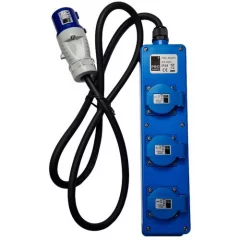
Length: 340mm
Width: 75mm
Height: 60mm
• 1 x CEE male connector
• 1.5 meter cable
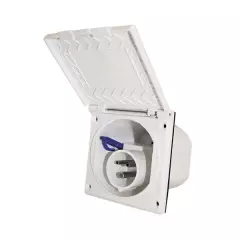
- Installation dimensions: Depth x Height x Width 83mm x 90mm x 83mm
- Wall mounting: 105mm x 105mm

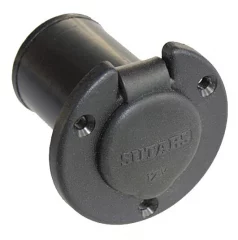
Female contact with round flange. Black nylon. Installation with three screws, recessed into a Ø 27 mm hole. Screw hole spacing 32 mm. Front plate: Ø 46 mm. Maximum current 16 A.

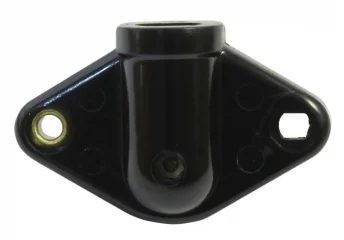
Socket made of black plastic and brass.
- Base plate: 58x42mm
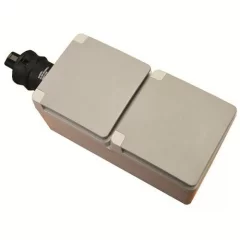
Socket, surface mounted 2-way socket IP 55, 16A/250V. Accessories suitable for the RATIO shore power system. Easy installation with connection.
- Surface-mounted
- 16A/250V

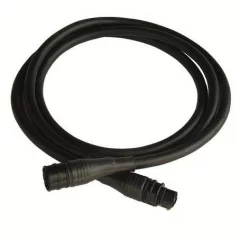
• Max 20A
• Plug & Play
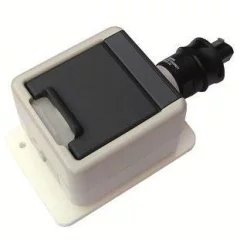
External wall socket with one connection. IP 55, 16A/250V. Accessories suitable for the RATIO shore power system. Easy installation with plug-in method. No electrician required for installation.
- Surface-mounted
- 16A/250V
- Ratio accessory
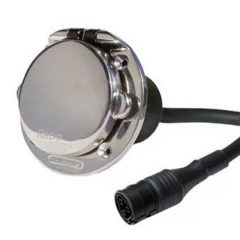
Stainless steel electrical plug with 0.4 meter cable. Accessories suitable for the RATIO shore power system. Easy installation with plug-in connection. No electrician required for installation.
- Power plug
- Stainless steel
- Cable: 0.4m


