Boating literature

Boating literature helps you understand nautical symbols, nautical chart symbols, and keep a logbook on your boat. Learn nautical symbols easily!

Boating literature -ryhmän tuotteet

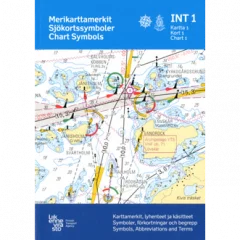
Nautical Chart Symbols, map 1
Available on order
29,90 €
Sailboat Operation, Stability and Performance Book
Kampanja
Available
35,00 €46,00 €
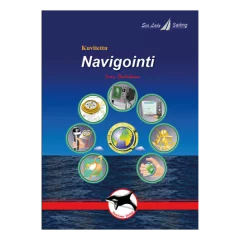
Illustrated Navigation Boating Book
Available
19,90 €
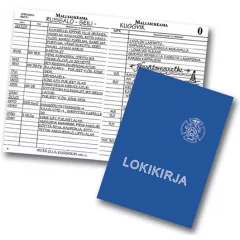
Lokikirja / Loggbok (Turin Partio-Sissit ry)
Available
29,90 €
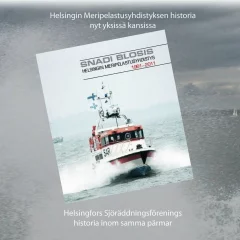
Snadi Blosis Book
Kampanja
Outlet
Available
23,00 €39,00 €
Icebreaker Sisu and the Lost City Book
Kampanja
Outlet
Available
10,90 €21,80 €
Radar Book (2004)
Kampanja
Outlet
Available
25,00 €40,00 €
Sjöfartsverket Card 1
Available from the supplier
17,30 €
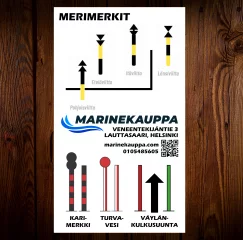
Nautical Navigation Sticker
Available
4,00 €
Children's Logbook
Kampanja
Outlet
Available
17,10 €19,00 €
Maritime Traffic Regulations 2024
Kampanja
Available
55,00 €59,00 €

Suosittelemme sinulle

Nautical signs, logbooks and other boating literature

Nautical markers are navigational aids used on the water, the purpose of which is to guide mariners safely and warn of dangers, such as shallows and shoals. It is a good idea to always carry a nautical chart marker guide with you on the water. The logbook records all significant events and information during a sea voyage. Discover our selection of boating literature!

Nautical chart symbols are the basis of navigation on the water.

Nautical chart marks are map symbols that represent navigational marks and obstacles in the water. They can be used to interpret a nautical chart and plan a safe route. Nautical chart marks depict, for example:

  • Location of the routes

  • Areas important for passengers and commercial traffic

  • Shoals and shallows to watch out for

  • Location of ports and anchorages

  • Depth information and other information relevant to navigation

Nautical chart symbols are standardized, and their symbols can be found in the explanations of nautical charts.

Learn the nautical signs!

Knowing how to read nautical charts is an important part of safe boating. By learning nautical symbols and their meanings, you can:

  • Avoids shallows and other hazards

  • Navigate more efficiently and safely

  • Identify ports, anchorages and other important locations

You can learn nautical symbols by using official nautical charts, practicing navigation, and getting to know the official symbol explanations of Finnish nautical charts with the help of our literature. Safe navigation on the water is based on correct navigation and learning nautical symbols. Also check out our navigation equipment!

A brief guide to nautical signs

Nautical marks indicate the location of fairways, restrictions or dangerous areas in the waters. They can be:

  • Fixed (built on the seabed, such as lighthouses and capes)

  • Floats (buoys and moving capes)

Nautical markers are part of the international navigation system standardized by IALA ( International Association of Marine Aids to Navigation and Lighthouse Authorities ), which is divided into two main systems:

  • IALA A (Europe, Asia, Africa, Australia)

  • IALA B (America, Japan, South Korea, Philippines)

The difference in these systems is the meaning of the colors of the lateral marks, but other nautical marks are the same in both systems.

Different types of nautical signs and their meaning

Maritime markers are divided into five main groups based on purpose and location:

1. Lateral markings – Fairway edges

Lateral markers indicate the direction of travel and the boundaries of a fairway. They are floating buoys or signs whose colors and shapes indicate which side of the fairway you should travel on.

IALA A system (Europe, Asia, Africa)
  • Red buoy or cape: On the left side of the fairway (when entering the port).

  • Green buoy or cape: On the right side of the fairway (when entering the port).

IALA B system (America, Japan, South Korea, Philippines)
  • Red buoy or cape: On the right side of the fairway (when entering the port).

  • Green buoy or cape: On the left side of the fairway (when entering the port).

Memory rule:
In Europe (IALA A) red is on the left, green is on the right. In the Americas (IALA B) the colors are reversed.

2. Cardinal signs – Signs indicating the direction of rotation of the hazard

Cardinal signs indicate which direction to go around a dangerous area. They are always yellow and black in color and have double cones at the top, indicating the correct direction.

  • Northern Cardinal -> Safe water in the north

  • Southern Cardinal -> Safe water in the south

  • Western Cardinal -> Safe Water in the West

  • Eastern Cardinal -> Safe Water in the East

Memory rule:

  • In the north sign, the black color is at the top because it points north.

  • In the South sign, the black color is at the bottom because it faces south.

  • In the western mark, black is in the middle and yellow is on top and bottom.

  • In the Eastern emblem, yellow is in the middle and black is on top and bottom.

Light codes:

  • Northern cardinal constantly flashes rapidly

  • Southern cardinal six flashes + one long flash

  • Eastern cardinal three flashes

  • Western Cardinal One-Eyed Series

3. Hazard signs – Marking of snags and other obstacles
  • Separate hazard sign: A red and black sign with two balls on top. Indicates a separate hazard, such as a reef.

  • Safety water mark: A red and white vertical stripe that indicates water in the middle of a safe fairway.

4. Special characters – Other characters that guide navigation
  • Yellow buoy or cape: Indicates a special area, such as a research area, training area, or conservation area.

  • Harbor entrance markers: Can be beacons, lights, or buoys that guide boats into the harbor.

How do you read nautical chart symbols?

Nautical charts contain various symbols and markings that, in addition to indicating fairways and hazards, indicate, among other things, the depth of water bodies.

Basics of reading a nautical chart:

  1. Blue and white background

    • White: Deep area, safe for sailing.

    • Blue: Shallow area that can be dangerous for shallow-draft vessels.

  2. Depth readings

    • Depths on a nautical chart are indicated in meters, and they indicate the depth of the water area at its shallowest point.

  3. Lane markings

    • The lanes are marked with a black line, which may have lateral markings on both sides.

  4. Splendor and lighthouses

    • On the map, glimmers and beacons are marked with a circle and their light characteristics, such as "Fl(2)5s" meaning two flashes every five seconds.

Learning nautical signs improves safety

Understanding nautical symbols and charts is a key skill for anyone on the water. By learning the lateral, cardinal, danger and special symbols, as well as their symbols on a nautical chart, you can navigate safely and avoid accidents.

Safe boating is based on good navigation skills and learning nautical chart symbols. Regular practice and familiarization with nautical charts make boating smoother and safer in all conditions. Also check out our course literature!

Using a logbook on a boat

The logbook can be either paper or digital, and it serves not only as a note-taking tool, but also as a safety document in case of possible accidents or disturbances.

What information is recorded in the logbook?

The information recorded in the logbook may vary depending on the purpose of the boating or seafaring activity. Typically, the following is recorded:

1. Basic information about the ship and the trip
  • Vessel name and registration information

  • Date and time

  • Ports of departure and arrival

  • Trip duration and route traveled

  • Number of passengers and crew

2. Weather conditions and navigation information
  • Wind speed and direction

  • Wave height and sea water condition

  • Visibility and cloud cover

  • Seawater temperature

  • GPS coordinates and course information

3. Vessel specifications and notes
  • Engine running time and fuel consumption

  • Possible faults or maintenance needs

  • Battery voltage and electrical system status

  • Use and modification of sails on a sailboat

4. Special events and observations
  • Abnormal weather conditions or storms

  • Other ships and possible encounters

  • Accidents, groundings or technical malfunctions

  • Crew health status and possible medical measures

Why is keeping a logbook important?

Keeping a logbook is useful and in some cases even legal. Its main benefits are:

Safety – A logbook helps you track your route and weather conditions, which can be critical in an emergency.
Documentation – If an accident or technical failure occurs, logbook information can help clarify the course of events.
Service and maintenance – Monitoring the condition of the vessel's engine and systems helps to anticipate maintenance needs.
Navigation support – Recorded coordinates and travel information can be useful when planning your next trip.

When is a logbook mandatory?

Keeping a logbook is mandatory in commercial shipping and on larger vessels. In recreational boating, keeping a logbook is not a legal requirement, but it is recommended, especially on longer journeys and when navigating on the high seas.

In some countries and insurance conditions, the use of a logbook may be a requirement for handling boating claims.

Nautical marks, nautical chart mark literature and logbooks from Marinekauppa!

By learning nautical signs and interpreting nautical chart symbols properly, you are contributing not only to your own safety but also to the safety of others. Learning nautical signs and practicing navigation can be a fun activity for even the youngest members of the family. By keeping a logbook, you can contribute to the safety and systematic maintenance of your boat. Check out our boating literature!

Nopea toimitus
Varastossa olevat tuotteet 1-3 arkipäivää. Tilaustuotteet arviolta 2-7 arkipäivässä.
Asiakaspalvelu
010 548 5605 asiakaspalvelu@marinekauppa.com
14 pv palautusoikeus
Tuotteilla on 14 päivän ilmainen palautusoikeus. Kaikilla tuotteilla on vähintään 6kk takuu.
Maksa turvallisesti
Turvalliset verkkomaksut. Maksa verkkopankeilla, luottokortilla, laskulla tai osamaksulla.
Maksutavat
Osuuspankki
Nordea
POP-pankki
Aktia
S-pankki
Säästöpankki
Handelsbanken
Oma Säästöpankki
Danskebank
Ålandsbanken
Visa
Mastercard
Collector bank
Klarna
MobilePay