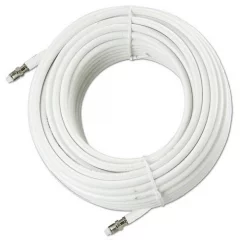
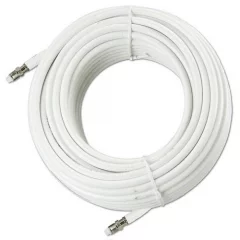
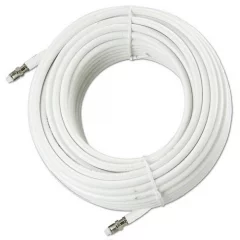
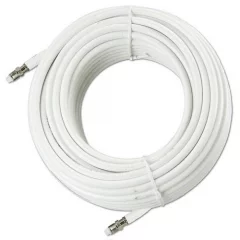
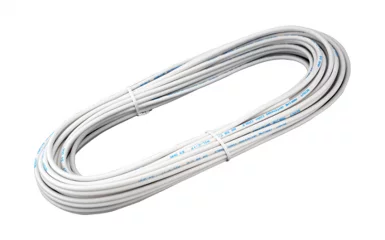
In the Antenna Cables department, you will find the coaxial cables needed to connect your boat's VHF, radar and other antennas: Scout's RG-6/U and RG-58 CU MIL VHF cables in 10, 20 and 100 meter lengths, as well as Glomex's RG8X coaxial cables in 3, 6, 12 and 18 meter dimensions suitable for different installation distances.
Why does the choice of cable type affect the performance of the antenna?
The type and length of coaxial cable directly affect the signal attenuation on the way from the antenna to the device – the longer the cable, the more signal is lost on the way, so a cable that is too thin or of poor quality can significantly reduce the range of a VHF radio over long installation distances. RG8X is thicker and attenuates the signal less than the thinner RG-58, making it the best choice when the distance between the antenna and the device is several meters.
RG-58 CU MIL-type cable is manufactured to military standards, which means tighter shielding and better durability in harsh environments – this is a good choice for shorter installations where the cable route runs through, for example, the engine bay or other electrically noisy areas. RG-6/U, on the other hand, is a more common choice for connecting digital signals, such as TV or satellite dishes.
It is a good idea to measure the cable length carefully before ordering and leave a little extra length for bends in the installation route and future changes – a cable that is too tight will not flex with the boat's movements and may become damaged at its attachment points over time. It is a good idea to always protect the cable connectors with a heat shrink sleeve or similar moisture protection if the connection is exposed to the weather.
A poor or wrong type of antenna cable is one of the most common causes of poor VHF reception at sea, even if the radio and antenna themselves are in perfect condition – so checking the condition of the cable should be part of regular maintenance of the boat's electrical system.
When installing the cable, it is also worth avoiding unnecessary connections along the way - each extension connector increases signal loss and is also a potential point of moisture penetration, so a continuous, properly-length cable is always a better solution than an installation assembled from several shorter pieces. If the cable has to be pulled close to metal structures or other electrical equipment, it is worth preferring a more shielded cable type to minimize interference in reception.
Glomex's RG8X series is designed specifically for boat use and its outer sheath withstands UV radiation and salt water even in long-term outdoor installation without becoming brittle, which is important for parts of the cable that remain visible, for example near a mast or antenna base, and do not run the entire length inside a protective tube.