Chains
Chains for tying boats, as anchor rope weights and for attaching buoys.Chains group products
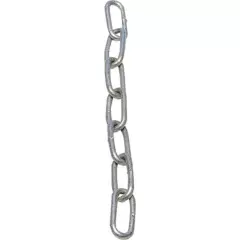
Long-link galvanized chain.
Specifications:
6mm chain
- Breaking strength:1150kg
8mm chain
- Breaking strength: 2000kg
10mm chain
- Breaking strength: 3100kg
13mm chain
- Breaking strength: 5300kg
- Available thicknesses: 6 - 13mm
- Available lengths: 2 - 8m
- Material: Galvanized steel

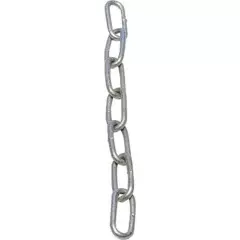
Long-link hot-dip galvanized chain. Package contains 25m of chain.
Specifications
- Breaking strength of 8mm chain: 2000kg
- Breaking strength of 10mm chain: 3100kg
- Breaking strength of 13mm chain: 5300kg
- Available thicknesses: 8, 10 and 13mm
- Material: Hot-dip galvanized steel
- Length: 25m
Short-link chain with long links at the ends. Used as additional weight between the anchor and the anchor line. Made of hot-dip galvanized steel.
- Diameter: 8mm
- Breaking strength: 2000Kg
- Length: 2m
Top quality hot dip galvanized calibrated chain, DIN766 short link. Compared to electrogalvanized (galvanized), hot dip galvanized has a thicker galvanized layer. Special chain for winches, where higher demands are placed on the similarity of the links. Available in several sizes.
Specifications
6mm/40m
- Weight: 36kg
8mm/50m
- Weight: 70kg
- Breaking strength: 1900kg
10mm/100m
- Weight: 240kg
- Available thicknesses: 6-10mm
- Available lengths: 40-100m
- Material: Hot-dip galvanized steel (DIN766)
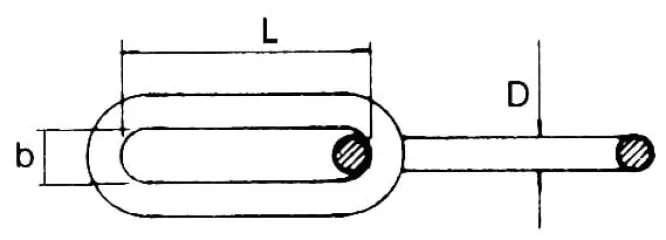
High-quality hot-dip galvanized long-link chain for attaching buoys, docks, etc.
Product dimensions:
- D: 13 mm
- B: 50 mm
- L: 82 mm
- Thickness: 13mm
- Material: Galvanized steel
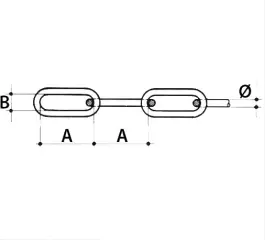
Long link chain made of acid-resistant steel. Price per meter.
- Metric goods
- DIN 763
- Breaking strength 125Kg
- Material: Stainless steel (AISI316)
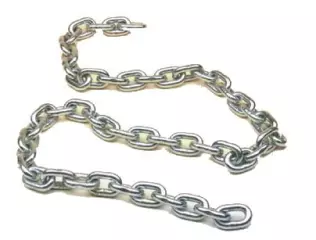
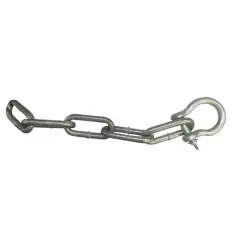
- Galvanized buoy chain, length 5 or 10m. The chain is long-link and has 10 mm galvanized lyre shackles attached to both ends.
Available in two different lengths;
5m - 10m
- Galvanoitu
- 5m
- 10m
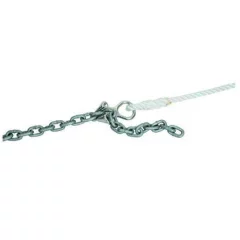
- Attached to a rope
- For 10-12mm chain
- Locks the chain

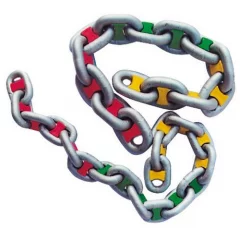
- For 8mm chain
- 50 pcs
- 5 colors

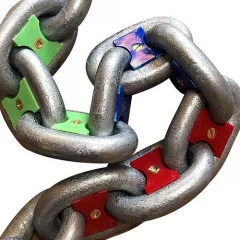
- Chain marks
- For 8mm chain
- No shedding

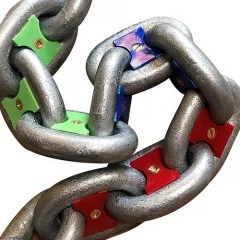
- Chain marks
- For 10mm chain
- No shedding


