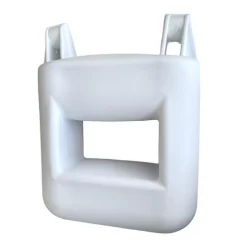
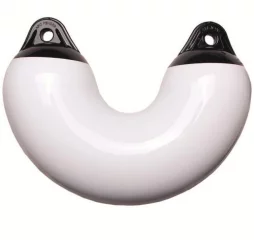
In the Step Fenders section, you will find step fenders made by Majon to protect your boat from being attached to the dock and wall: a single-step model in white and a 54x43 cm version in white with black ends.
How is a step bouncer different from a regular ball bouncer?
The step-down fender is shaped flatter and wider than a round ball fender, giving it a larger contact surface against the dock or wall – this distributes the weight of the boat better over a wider area and reduces local stress on the hull surface compared to a more point-like contact.
The model is particularly suitable for fixed dock structures and walls where the side of the boat rests directly against the structure, for example in a long-term berth - the flat shape stays in place better against a flat surface than a round fender, which can rotate or slide sideways.
The black head with black accents gives the rudder a clean, unobtrusive look that matches most boat color schemes, while the light body section is easy to keep an eye on during docking maneuvers.
When choosing a size, it is worth considering the weight and size of the boat - the larger 54x43 cm model is suitable for heavier and larger boats that need more protective surface area, while the smaller one-step model is sufficient for a lighter boat or as additional protection alongside other fenders.
The attachment is typically done with a rope to the boat's railing or other attachment point at a suitable height against the pier - it is worth adjusting the height according to the water level and the structure of the pier so that the fender hits the side at just the right point throughout the attachment.
Regular inspection and cleaning keeps the fender surface clean and does not leave dark marks on the side of the boat – especially the white color should be washed regularly if the fender is exposed to dirty harbor water or algae growth.
Combining multiple fenders at different points on the boat – for example, a step fender in the middle and ball fenders at the bow and stern – provides more comprehensive protection along the entire length of the hull in various docking situations than just one type of fender alone.
It is a good idea to adjust the length of the mooring rope so that the fender hangs at just the right height in relation to the side of the boat and the dock structure – a rope that is too long will cause the fender to swing too much, while a rope that is too short will not flex with the movements of the boat.
Check the surface of the fender regularly for wear and tears, as a damaged surface will no longer protect the boat as effectively from bumps.