Handrail cable pads
Tuoteryhmät
Handrail cable pads -ryhmän tuotteet
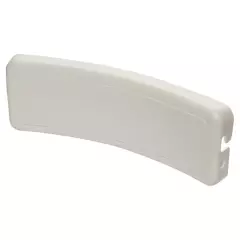
The anatomically shaped backrest is designed to reduce discomfort when sitting and leaning on the handrail cables. The backrest is easy to attach to the cable and provides better support when steering, for example. Made of white, UV-stabilized special plastic for the challenging marine environment. The design is easy to attach and detach without damaging the cable. Suitable for boats with mantouk cables.
- Reduces pressure on the back when sitting
- Easy to assemble by hanging
- Easy to move or remove if needed
- Gentle on cables
- Promotes better comfort in the cab
- Type: backrest for mantook
- Material: UV-protected plastic
- Color: white
- Dimensions: 380x120mm
- Anatomically shaped backrest
- Attaches directly to the mantoux wire
- UV-stabilized plastic
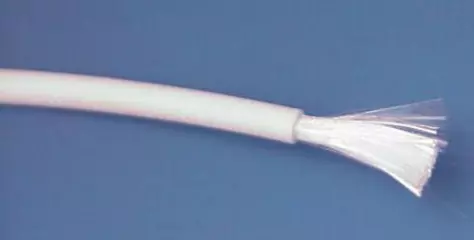
Parafil rope used to secure railing openings. Can be combined with mantåg nets. Remove the rope sheath so that the threads are free. Slide the end piece so that the wedge points towards the center of the threads. The wedge presses the threads against the outer sheath of the end piece.
- Parafil rope
- Length: 30m
- Thickness: 7mm

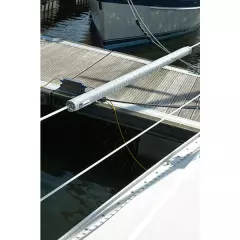
The handrail padding adds comfort and protects the handrail. The material used is durable Ripstop.
Available in three different sizes:
Available in three different sizes:
- Length: 1.0m
- Length: 1.5m
- Length: 2.0m
- Color: Gray
- Material: Ripstop