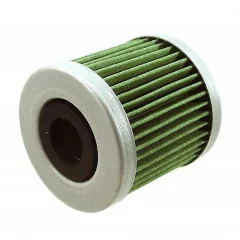
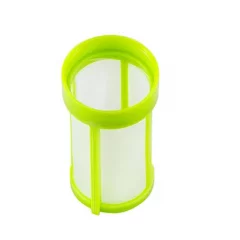
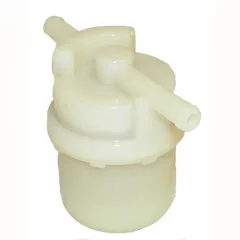
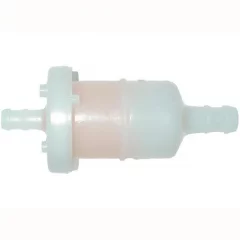
Honda fuel filters keep the fuel clean and protect the sensitive injection system from contaminants — especially important in modern EFI engines with small nozzle clearances. The range includes filters for a wide power range: a dedicated filter for the BF35–BF90 series, another for the smaller BF8–BF30 engines, and also filters marked with exact original part numbers (16901-ZZ5-003, 16910-ZY9-004, 16911-ZY3-010) for specific engine models.
It is advisable to replace the fuel filter at the manufacturer's recommended intervals as part of normal maintenance, as a clogged filter can cause loss of power, uneven running or, in the worst case, the engine to stall while driving. The addition of ethanol, especially in Finnish fuel, can accelerate filter clogging compared to pure gasoline, so it is not advisable to extend the replacement interval beyond the recommended period.
Choosing the right filter is based on the engine model and power — there are several filter versions within the BF series of Honda engines, so the safest way is to check your engine part number before ordering if there is uncertainty about the power range coverage.
It is a good idea to check the engine manual for the fuel filter replacement interval, but as a general guideline, the filter should be replaced at least once a season, or more often if the fuel contains ethanol or the boat has been stored for a long time with a full tank without use. A clogged filter often shows as a loss of power during acceleration before the engine eventually shuts down completely, so it is worth taking uneven running seriously at an early stage. Filters marked with the original part number (16901-ZZ5-003, 16910-ZY9-004, 16911-ZY3-010) guarantee compatibility with the exact engine model, which is especially important in EFI injection systems, where the permeability of the wrong filter can be either too tight or too loose compared to the original. When replacing the filter, it is also worth checking the condition of the fuel hoses and the tightness of the clamping rings, as an air leak in the hose connection can cause similar symptoms to a clogged filter, which can easily lead to unnecessary suspicion of the filter when the real fault lies elsewhere.
After replacing the filter, it is always a good idea to bleed the fuel system according to the manufacturer's instructions before starting the engine to ensure smooth operation.
Keeping a spare filter on the boat is recommended if the engine is used a lot during the season for longer trips.
When replacing, it is also a good idea to clean the area around the filter of dirt so that the new filter can be installed tightly without leaks caused by impurities.
The quality of the filter directly affects the reliability of the engine, so using original parts is always recommended to ensure reliable operation.
Regular maintenance is the best way to avoid unexpected engine failures on a long sailing trip.