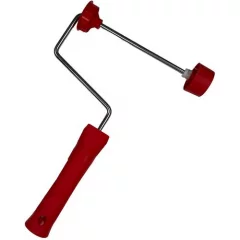
Rollers and roller sets
A roller paints larger, more even surfaces faster than a traditional brush. A shorter pile roller gives a more even finish, while a longer pile roller gives a thicker coat of paint. Foam rollers leave a smooth surface, but they do not withstand thinners well.Rollers and roller sets group products
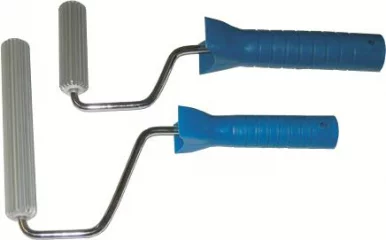
Airing roller, width 140mm.
- Aluminum roller
- For air removal when laminating
- Width: 140mm
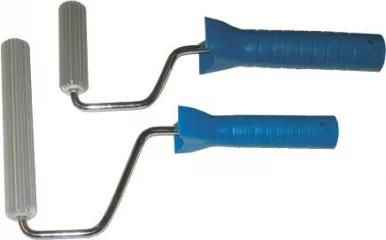
Airing roller, width 70mm.
- Aluminum roller
- For air removal when laminating
- Width: 70mm
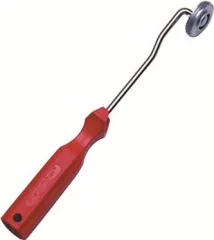
Air release roller with angle roller. Width 40mm. Handle 300mm
- For lamination
- Roll thickness 11mm
- Roll width 40mm
- Total length 530mm
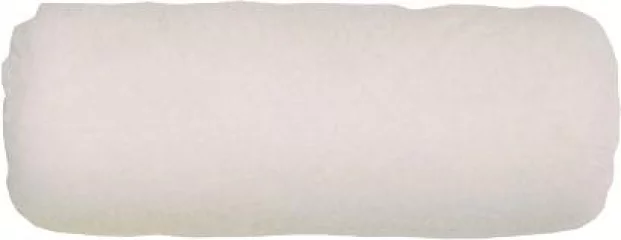
Professional paint roller made of felt. The material is almost lint-free and is best suited for clean and flat surfaces. Excellent for low-viscosity solvent-based paints. Fits mini roller arms.
- Flat surface
- Width 100mm
- Almost lint-free

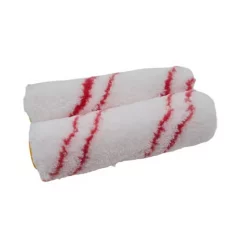
Microfiber paint roller with very high suction power and even paint spread. The material is almost lint-free. Best suited for clean and flat surfaces. Installed on the roller arm by pressing.
- Microfiber
- Width 100mm
- Good paint absorption
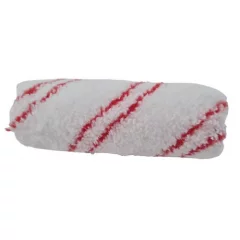
High-quality microfiber roller. The product offers high paint absorption and even paint application. The material is almost lint-free and ensures a smooth surface texture. The paint roller is trimmed on both edges, which ensures smooth paint borders. Suitable for use in small roller painting jobs. The product should be washed before use.
- Microfiber
- 120mm
- Good paint absorption
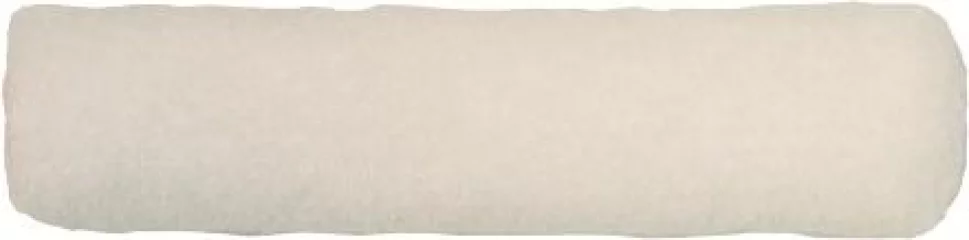
Professional paint roller made of woven polyester. Almost lint-free. Recommended for clean and smooth surfaces. Used on mini roller arms. The roller is installed on the roller arm by pressing.
- Woven polyester
- Width 150mm
- Almost lint-free

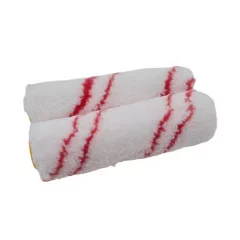
Microfiber paint roller with very high suction power and even paint distribution. The material is almost lint-free, but should be rinsed before use. The paint roller is neatly cut on both edges, which ensures even paint borders. Recommended for clean and flat surfaces. Used with the Mini roller arm. The roller is installed on the roller arm by pressing.
- Microfiber
- Width 150mm
- Good paint absorption
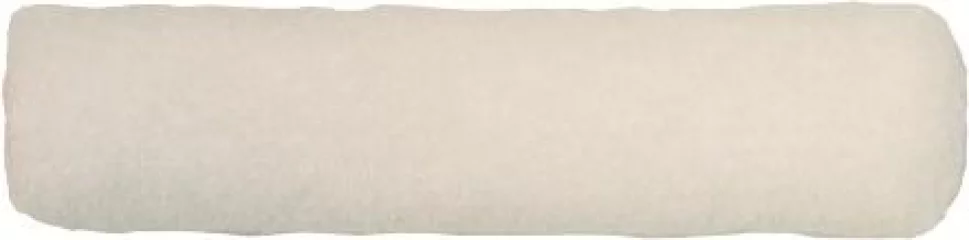
Made of woven polyester. Almost lint-free, but should be rinsed before use. Optimal on flat surfaces. Used in mini roller arms. The roller is installed on the roller arm by pressing.
- Woven polyester
- Width 100mm
- Almost lint-free
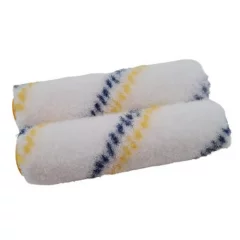
Made of solvent-resistant polyamide/nylon blend. Almost lint-free, recommended for flat surfaces. Used in mini roller arms. Installed by pressing onto the roller arm.
- Polyamide/nylon
- For flat surfaces
- Width 150mm
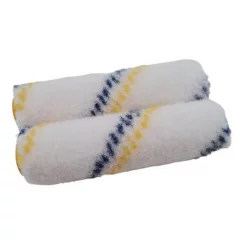
Made of solvent-resistant polyamide/nylon blend. Almost lint-free, recommended for flat surfaces. Used in mini roller arms. Installed by pressing onto the roller arm.
- Polyamide/nylon
- For flat surfaces
- Width 100mm
- 2 pieces in the package
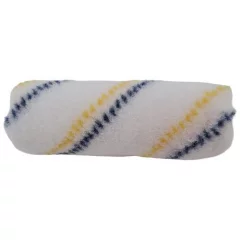
Paint roller 120mm made of polyamide/nylon blend. The material is almost lint-free. Recommended for flat surfaces. Used in mini roller arms. Installed on the roller arm by pressing.
- Polyamide/nylon
- For flat surfaces
- Width 120mm
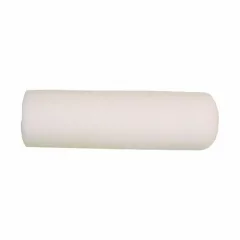
Made of compressed foam. Leaves a bubble-free surface. Also excellent for varnishing. Used in mini roller arms. Foam rollers are not resistant to thinners. Installed on the roller arm by pressing.
- Foam roller
- Smooth track
- Width 110mm
- 2 pieces in the package
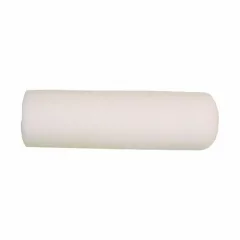
Made of compressed foam. Leaves a bubble-free surface. Also excellent for varnishing. Used in mini roller arms. Foam rollers are not resistant to thinners. Installed on the roller arm by pressing.
- Foam roller
- Smooth track
- Width 160mm
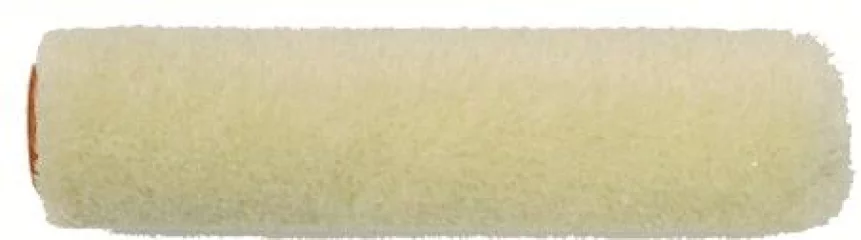
Professional Velour paint roller 100mm for painting. Solvent-resistant and lint-free. Rinsing is recommended before use. Even paint finish. Used in mini roller arms. Installed by pressing onto the paint roller.
- High-quality velour
- Width 100mm
- Lint-free
- 2 pieces in the package
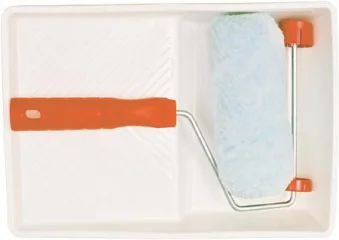
The roller set includes a roller arm, roller and paint container.
- 1 pc track arm
- 1 polyester roll
- 1 pc. trough
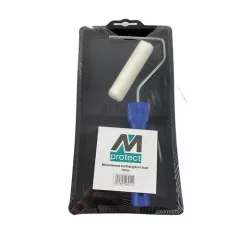
• Rack and hook
• 100 mm felt roller
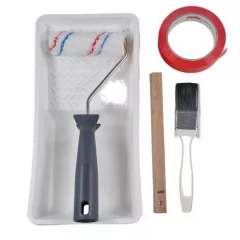
The paint roller set includes a microfiber roller, tray, brush, waterline tape and a mixing stick.
- Complete set
- For painting the base
- 100mm wide microfiber roller
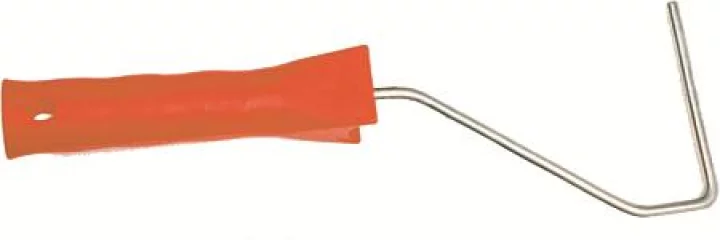
• Two lengths
• Without screws