Trailer fittings and accessories
Tie-down loops for locking the boat and towing it to a trailer.Tuoteryhmät
Trailer fittings and accessories -ryhmän tuotteet
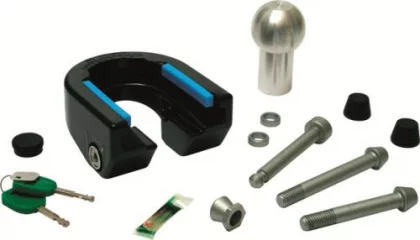
Combilock trailer lock, suitable for Thule, Fogelsta, Brenderup and Easyline, among others. Combilock is an SBSC approved product and is accepted as a lock by most insurance companies.
- Blue model
- SBSC approved
- Robust construction

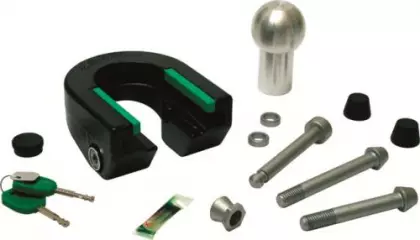
Combilock trailer lock, suitable for Thule, Fogelsta, Brenderup and Easyline, among others. Combilock is an SBSC approved product and is accepted as a lock by most insurance companies.
- Green model
- SBSC approved
- Robust construction
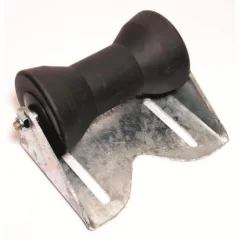
Keel rollers in two qualities, standard and HD (reinforced). Suitable for Thule, Fogelsta, Brenderup, Easyline and others.
- Base: 215mm x 150mm
- Mounting point CC 140mm.

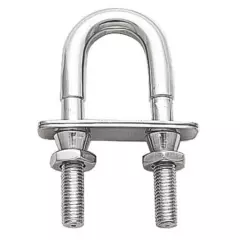
Bow eye, class 2, made of AISI316 stainless steel.
- A: 40mm
- D1: M10
- D: 12mm
- L: 100mm
- L1: 48mm
- Thread M10
- Stainless steel

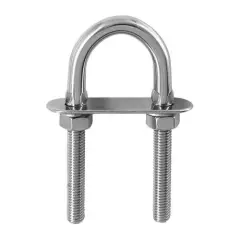
Stainless steel mounting eyelet.
Dimensions
- Thread D1: M8
- Length L: 100mm
- Length L1: 50mm
- Width W: 35mm
- Stainless steel (AISI316)
- Length: 100mm
- Bolt distance center to center: 35mm
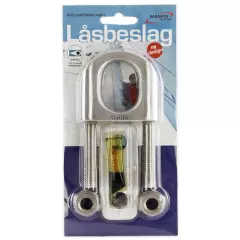
Locking fitting / bow ring. Made of stainless steel AISI 316. Breaking strength 6000kg. Height of visible part 60mm. 2 pcs M12 bolts included, height 60mm.
- Material: Stainless steel A4/AISI 316
- Finish: Hard chrome plated
The package includes
- 1 pc bow ring
- 2 pcs bolts
- 1 pc washer
- 2 lock nuts
- 1 pc Loctite adhesive filler
- Installation instructions
- Class 3
- Breaking strength 6000kg
- Stainless steel
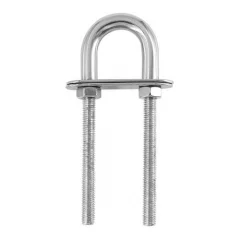
Bow loop made of stainless, acid-resistant steel.
- D1: M8
- L: 90mm
- L1: 47mm
- D: 10mm
- W: 45mm

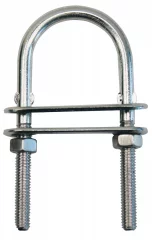
OUTLET
Stainless steel bow loop.
- Bolt diameter: 5mm
- Bottom length: 35mm
- Total length: 67mm
- Material: Stainless steel (AISI304)
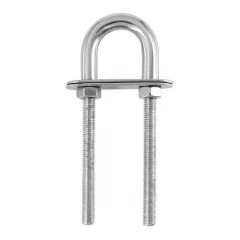
Stainless acid-resistant steel (AISI316).
- D1: M8
- L: 80mm
- L1: 40mm
- D: 10mm
- W: 35mm
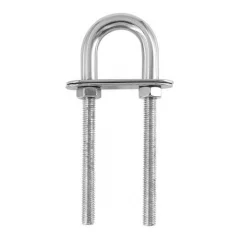
Bow loop made of stainless, acid-resistant steel.
- D1: M10
- L: 90mm
- L1: 35mm
- D: 12mm
- W: 50mm
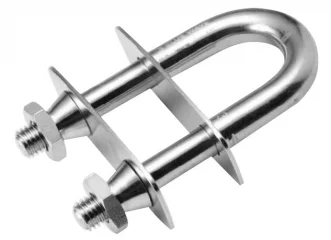
OUTLET
Hardened surface AISI316. Approved by the Swedish Anti-Theft Association, class 3.
- G= M10
- D=12mm
- L1=95mm
- L2=45mm
- L3=38mm
- L4=40mm
- B1=30,0mm
- B2=28,0mm
- Murtolujuus 3500Kg
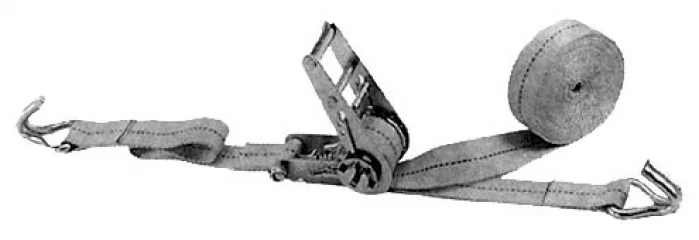
OUTLET
2-piece, hook on both ends, ratchet tensioner, 1 1/2” x 4.5 m, pull 2t.
- 2-piece
- Ratchet wrench
- Traction: 2t
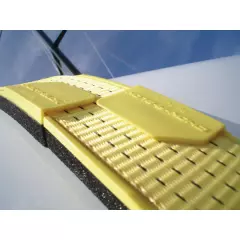
Cargo strap protector for 25-38 mm wide cargo straps. Protects your boat against scratches and other damage. Reliable grip. Extends the life of the cargo strap and prevents the cargo strap from twisting. Made of polypropylene.
- Easy installation
- Lightweight and stays in place well
- Easy to transfer to the touch point
- The padding material has a closed cell structure, so it does not absorb moisture.
- When tightening the load strap, friction damage is reduced because the cover can slide thanks to the polypropylene outer surface.
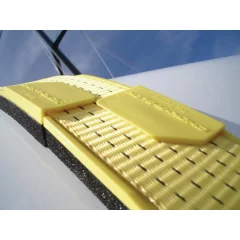
Cargo strap protector for 50 mm wide cargo straps. Protects your boat against scratches and other damage. Reliable grip. Extends the life of the cargo strap and prevents the cargo strap from twisting. Made of polypropylene.
- Easy installation
- Lightweight and stays in place well
- Easy to transfer to the touch point
- The padding material has a closed cell structure, so it does not absorb moisture.
- When tightening the load strap, friction damage is reduced because the cover can slide thanks to the polypropylene outer surface.
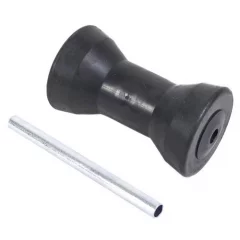
Keel roller in grey or blue. Two quality levels, standard and HD (reinforced). Suitable for Thule, Fogelsta, Brenderup, Easyline and others.
- Length: 196mm
- Overall diameter: 110mm
- Hole diameter: 17mm

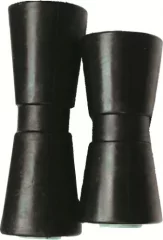
Keel roll Heavy Duty
- Width: 200mm
- Diameter: 57/85mm
- Hole: 16mm
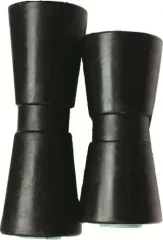
Keel roll Heavy Duty
- Width: 250mm
- Diameter: 57/85 mm
- Hole: 16 mm
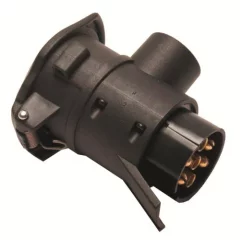
Trailer conversion adapter with 7 or 13-pin connector and plug holder, suitable for Thule, among others.
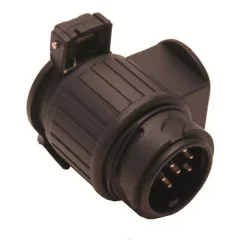
Trailer conversion adapter with 7 or 13-pin connector and plug holder, suitable for Thule, among others.
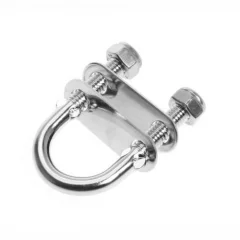
Standard length bow eye with lock nut for secure attachment to your boat. Made of stainless steel.
- Available in 60mm, 70mm and 90mm sizes.
- Stable and stylish design