SOLAS Lifebuoys
Product groups
SOLAS Lifebuoys group products
Campaign
OCTOBER SALE!
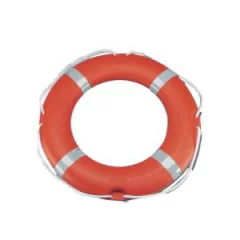
SOLAS 74/84 approved 2.5kg lifebuoy. Buoyancy 180 newton. Orange lifebuoy with 4 reflectors and a grab line.
- Diameter: 75cm
- Opening diameter: 45cm
- Weight: 2.5 kg
- Approved: SOLAS 74/83
- Lift: 180N

Campaign
OCTOBER SALE!
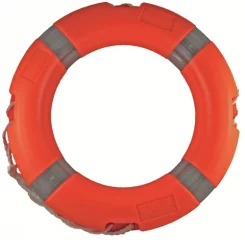
Round SOLAS approved lifebuoy. Hard polyethylene plastic.
- Diameter: 600 mm
- SOLAS approved
- Color: Orange
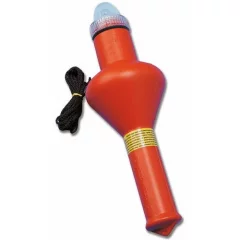
Solas and EU Marine Equipment Directive compliant and approved lifebuoy indicator light. Operates on four 1.5V alkaline batteries (not included, must be purchased separately).
- Incandescent bulb
- 4 × 1.5 V round batteries (not included)
- SOLAS , EU directive compliant and approved

Campaign
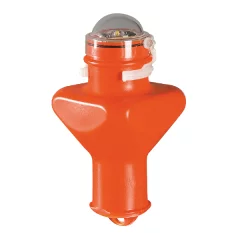
- SOLAS-approved floating lifebuoy light. Compact size light with LED flashing light that activates automatically when the light is turned the right way up (light up) and turns off automatically when the wrong way down (light down). Operates on one R20 D battery that gives 8 hours of operation (battery not included). The light flashes once per second (60 times/min). The light comes with a 3m cord that can be used to attach the light to a lifebuoy.
FEATURES:
Floating LED Lifebuoy Light - Turns on and off automatically
- Operating time: 8 hours (flashes 60 times/min)
- Light output: 2 cd
- SOLAS/MED approved
- 3 meters of string in the package
- SOLAS/MED approved
- Floating LED Lifebuoy Light
- Size: 160 x 80 x 80 mm
- Turns on and off automatically
- Operating time: 8 hours (flashes 60 times/min)
- Light output: 2 cd
- Weight: 90g (without battery)
- Battery: R20 D battery (not included)

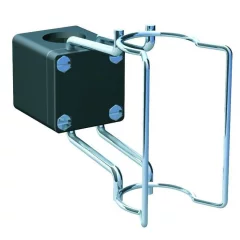
Easy-to-use lifebuoy light holder that keeps the light securely attached and always within reach. Includes a railing bracket for 25mm pipe.
- 25mm handrail bracket
- Lifebuoy light stand

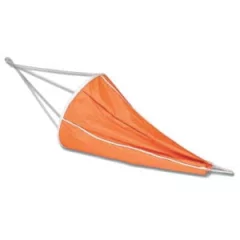
A sea anchor that can be attached to a lifebuoy or life jacket. A useful rescue tool that you will appreciate in an emergency.
- Color: orange
- Diameter: 150mm
- Length: 250mm
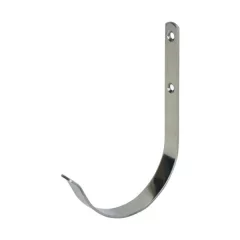
Stainless steel lifebuoy holder. 1 piece per package.
- Lifebuoy holder
- Stainless steel
- 1 piece in the package


