Boat Batteries – Marinekauppa
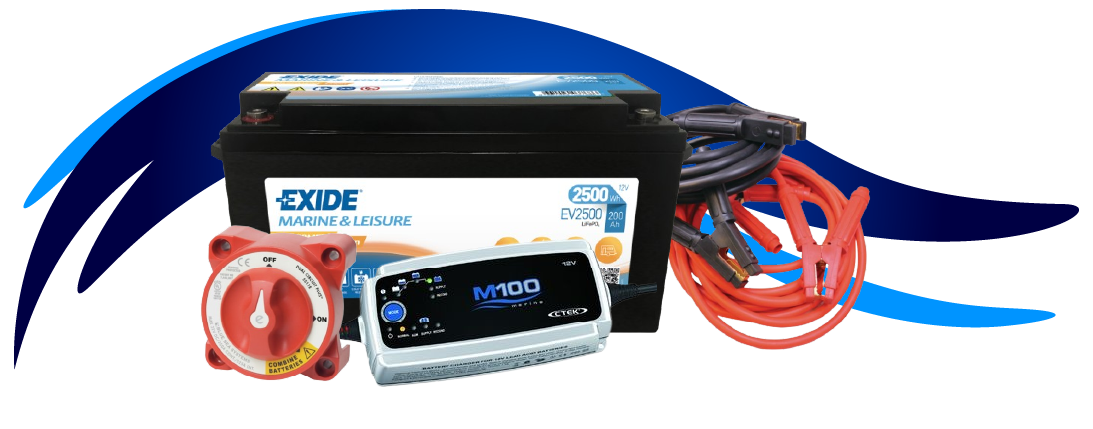
A boat battery is specially designed for marine use, providing power for the boat’s electrical systems and engine. A boat battery enables engine starting as well as the use of lights, navigation devices, entertainment systems, and other electrical equipment while on the water. When looking for a battery for your boat, it is important to understand the basics of your boat’s electrical system. Explore Marinekauppa’s wide selection of boat batteries and find the perfect one for your needs!
How Does a Boat Battery Differ from Other Batteries?
A boat battery differs from car batteries and general-purpose batteries in several key ways:
Purpose of use:
Some boat batteries are designed to handle both starting power (a high burst of current to start the engine) and deep discharge cycles (long-term power use at low loads), whereas car batteries are mainly intended for starting only.
On boats, two main battery types are commonly used:
Starting batteries: Provide a high burst of current for engine start-up.
Deep-cycle batteries (leisure/service batteries): Supply steady power over long periods for appliances such as lights, refrigerators, and navigation devices.
Structural durability:
Boat batteries are built to withstand vibration, moisture, and tilting. They are often better protected against corrosion.
Moisture resistance:
Most boat batteries are fully sealed, preventing leakage and evaporation.
Materials and capacity:
Boat batteries are commonly lead-acid, AGM (Absorbent Glass Mat), or lithium-ion batteries, offering wider capacity options and better cycle life.
How Long Do Boat Batteries Last?
The lifespan of a boat battery depends on battery technology, usage, and maintenance. Typical lifespans include:
Lead-acid batteries: 2–5 years
AGM batteries: 4–7 years
Lithium-ion batteries: 8–10 years or more
Proper maintenance—such as regular charging, avoiding deep discharges, and checking electrolyte levels in flooded lead-acid batteries—can significantly extend battery life.
How to Choose the Right Battery for a Boat
When choosing a boat battery, you should consider intended use, capacity, voltage, battery type, and marine conditions. The right choice affects both electrical performance and battery longevity.
Boat battery purpose
Boat batteries serve two main functions: engine starting and powering onboard electronics.
Starting battery:
Designed to provide a short but powerful burst of energy for starting the engine.
Choose a battery with sufficient Cold Cranking Amps (CCA) for your engine, especially in cold conditions.
Starting batteries are not designed for deep discharge and should not be used for long-term appliance power.
Deep-cycle battery (service/leisure battery):
Designed for long-lasting power supply and can be discharged nearly empty without damage.
Ideal for devices such as navigation lights, fish finders, and refrigerators.
Deep-cycle batteries charge more slowly, making them best for continuous use situations.
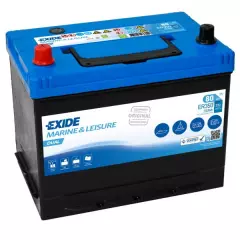
Dual-purpose battery:
Combines features of both starting and deep-cycle batteries.
A good option when space is limited and you need both starting and service power.
Suitable for lighter use but not as efficient as separate dedicated batteries.
Boat Battery Capacity
Battery capacity is measured in ampere-hours (Ah) and indicates how much power the battery can deliver over time.
Calculate the total power consumption of all devices onboard.
Ensure capacity meets your needs without deep discharging below 50%, which improves lifespan.
Example: If your devices consume 20 A per hour over 5 hours, you need at least a 100 Ah battery.
Electrical System Voltage
The boat’s system voltage determines compatible batteries:
12 V systems: Most common in small and mid-sized boats.
24 V systems: Used in larger boats with more equipment or powerful motors.
Higher voltage can be achieved by connecting batteries in series (for example, two 12 V batteries produce 24 V).
Boat Battery Types
Choose a battery type suitable for your boat’s conditions:
Lead-acid batteries:
Most affordable option.
Require regular maintenance such as electrolyte checks and refilling.
Best for lighter use or less demanding environments.
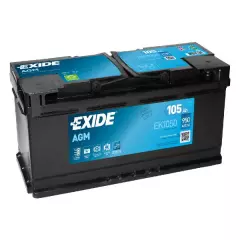
AGM batteries:
Maintenance-free, resistant to vibration and moisture.
Suitable for both starting and service use.
Recommended for demanding marine conditions or limited battery space.
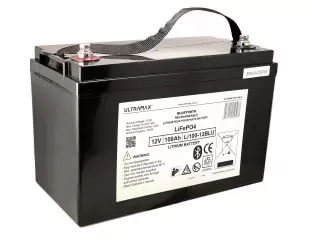
Lithium-ion batteries:
Lightweight, long-lasting, and highly efficient.
Can discharge almost fully without damage, offering higher usable capacity.
More expensive upfront, but cost-effective over their long lifespan.
Marine Operating Conditions
Boat batteries must withstand challenging conditions:
Moisture: Choose sealed or splash-resistant batteries, especially for open boats.
Vibration: Batteries must be mechanically durable due to constant movement.
Temperature: If exposed to extreme temperatures, select a battery that performs reliably in both cold and heat.
Choosing the right battery means evaluating whether you need a starting, deep-cycle, or dual-purpose battery. Consider your device power consumption, system voltage, battery technology, and marine conditions. A high-quality battery ensures reliable boating for years.
How to Maintain a Boat Battery
Keep the battery charged:
Avoid deep discharging below 50%.
Clean terminals:
Inspect regularly and remove corrosion. Use protective grease on terminals.
Check electrolyte levels:
If the battery is not sealed, top up with distilled water when necessary.
Winter storage:
Remove the battery, fully charge it, and store it in a cool, dry place. Recharge before the next season.
Use a proper charger:
Choose a high-quality marine smart charger that prevents overcharging.
What to Do if a Boat Battery Suddenly Stops Working
Check connections: Ensure terminals are clean and tight.
Measure charge level: Use a voltage meter or battery monitor.
Recharge the battery: Connect it to a charger and see if it charges normally.
Identify the cause: If it won’t charge, the issue may be the charger, wiring, or battery itself.
Replace if necessary: Old or damaged batteries should be replaced.
Frequently Asked Questions – Boat Batteries
What types of boat batteries does Marinekauppa offer?
Marinekauppa provides a wide range of boat batteries, including starting batteries, leisure batteries, AGM batteries, and lithium batteries, selected for different boat types and uses.
Are boat batteries always in stock?
Yes, we maintain a comprehensive inventory to meet customer needs.
How do I find the right battery for my boat?
Browse our selection and product guides. Detailed technical specifications help you choose the right model.
What should I consider when selecting a boat battery?
Your boat type and battery purpose are key. We offer solutions for both starting and service power needs.
Which batteries are most popular at Marinekauppa?
AGM and leisure batteries are especially popular, while lithium batteries are increasingly common as service batteries.
Do I need special tools to install a boat battery?
Basic tools such as wrenches and screwdrivers are usually sufficient. We also offer installation kits and accessories.
Can Marinekauppa help me choose the right battery?
Yes, our experts are always ready to assist. Visit our store or contact us by email for personal guidance.
Why choose Marinekauppa batteries?
We only offer high-quality batteries from leading manufacturers. Our wide stock, competitive prices, and excellent customer service make us the best choice for all your battery needs.
Explore our selection and find the right boat battery today!


