The right oil and a regular change interval are the cheapest way to extend the life of an outboard or diesel engine.
Why the right oil matters
Marine engines face more full-load running, moisture and long lay-up periods over winter than most road engines. The wrong or aged oil weakens lubrication exactly when the engine needs it most.
2-stroke vs. 4-stroke oil
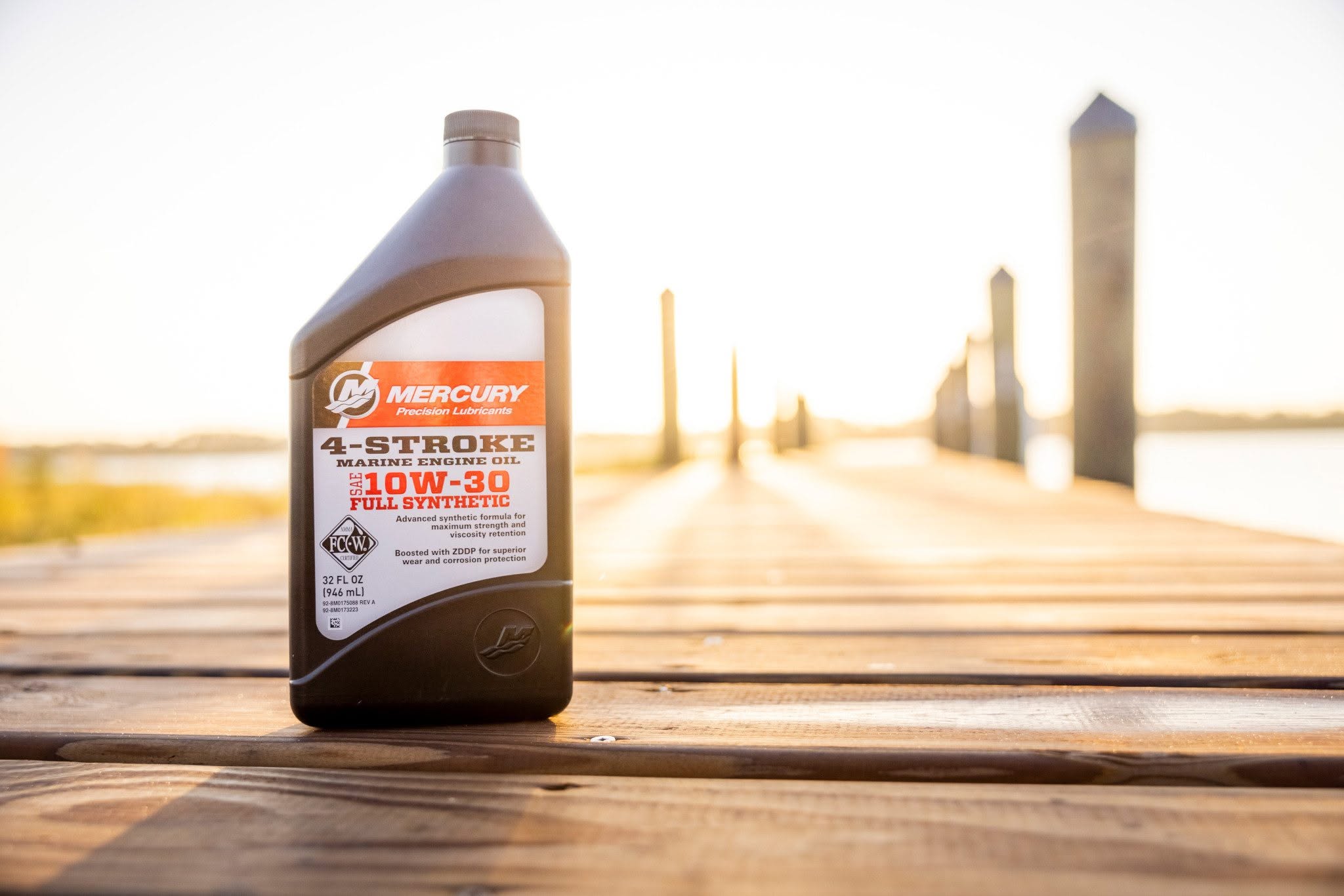
A 2-stroke engine needs a separately mixed or auto-injected 2-stroke oil that burns along with the fuel. A 4-stroke engine uses a dedicated engine oil whose viscosity and quality grade must match the manufacturer's specification. See also our guide to 2-stroke and 4-stroke outboard service.
Diesel engine oil
Diesel engines often require a higher viscosity and a different additive package than petrol outboards, because combustion temperatures and pressures are higher. Always use the oil grade approved by the manufacturer.
Change interval and warning signs
The interval depends on running hours and the manufacturer's recommendation, but a long winter lay-up is also a good reason to change the oil before storage - see our engine winterisation guide. Dark, cloudy or watery oil is a sign the change is already overdue.
Don't forget the filter
Always change the oil filter along with the oil. Browse general-purpose filters and brand-specific oils such as Suzuki oils, Yanmar oils and Evinrude oils to find the right product for your engine.
Summary
· Always use the oil grade and viscosity approved by your engine's manufacturer.
· 2-stroke, 4-stroke and diesel engines each need their own oil type.
· Change the oil and filter before winter storage - don't leave old oil in the engine over winter.