Mobile phone coverage doesn't reach every part of the Finnish archipelago and lakes. A VHF radio remains a boater's most important communication tool in an emergency.
Why every boat needs a VHF radio
A VHF radio operates on the maritime frequency band monitored by both other boaters and rescue authorities. Channel 16 is the international distress and calling channel, monitored around the clock. Unlike a phone call, a VHF call is heard by every nearby vessel, which speeds up help arriving in an emergency.
Fixed-mount or portable VHF?
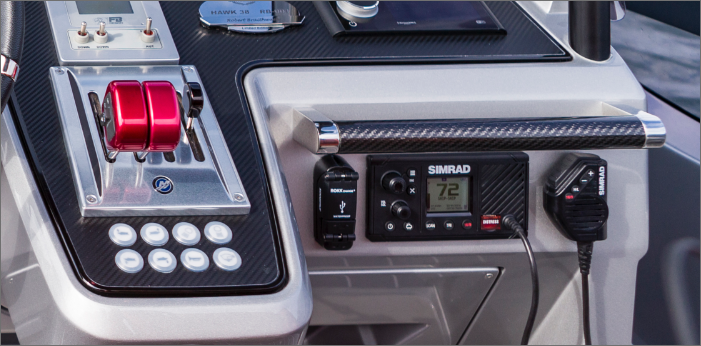
A fixed-mount marine VHF radio connects to the boat's electrical system and an external antenna, giving the best transmit power and range. It's the right choice for boats in heavy use or offshore trips.
A portable marine VHF radio is battery-powered, waterproof and floating, and works as a backup or in smaller boats even when the boat's power is off.
DSC and MMSI – the key feature of a modern VHF
Newer VHF radios include built-in DSC (Digital Selective Calling) and often a GPS receiver. DSC lets you send a one-button distress call that automatically transmits your boat's position and identity to monitoring stations and nearby DSC-equipped vessels.
Using DSC functions requires an MMSI number, which boaters in Finland can apply for free of charge from Traficom, the Finnish Transport and Communications Agency. Apply for it as soon as you buy the radio.
Choosing the right antenna
The antenna affects transmit power and range as much as the radio itself. The VHF antenna range includes models for both motorboats and sailboats. Rule of thumb: the higher the antenna is mounted, the further the signal reaches.
Installation and accessories
Installing a fixed VHF requires an antenna cable, a deck gland, a fuse and often a handset speaker. VHF accessories covers the cables and connectors in one place. A VHF radio is part of a boat's safety equipment - see also our guide to mandatory boat equipment.
Summary
A fixed VHF gives the best range; a portable one serves as backup and works well on smaller boats.
DSC and an MMSI number speed up getting help - apply for the number from Traficom as soon as you buy the radio.
Antenna height and placement affect range more than the radio's power setting.